What Is Hammam Used For In Istanbul?
A hammam in Istanbul is used for full body bathing, the kese and foam cleanse, rest in the hot room, social and bridal ceremonies, and even monument visits. This guide explains each purpose.
What Is Hammam Used For In Istanbul?
A hammam is used for five distinct things: full body washing with the kese scrub and foam massage, rest and heat therapy on the warm marble, socializing in a shared public space, ceremonial celebrations such as the bridal bath, and simply visiting a historic monument. The great working bathhouses of Istanbul still serve all five at once, and the lines between them blur the moment you walk through the door.
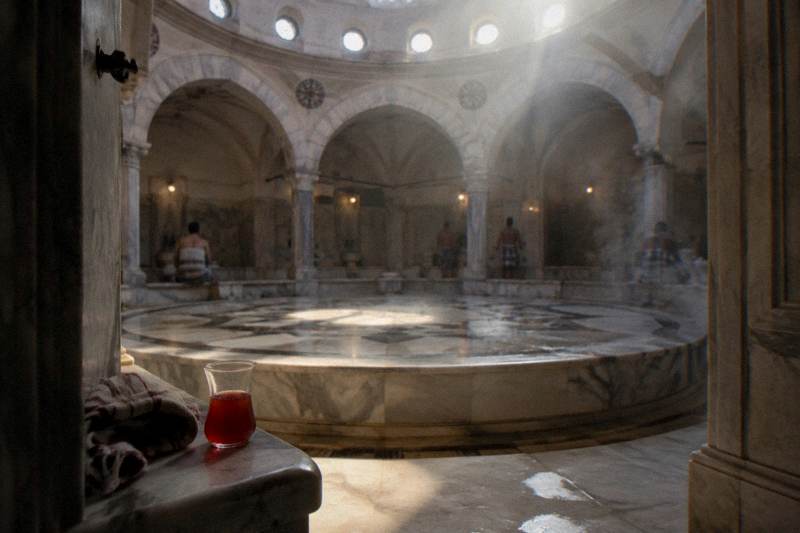
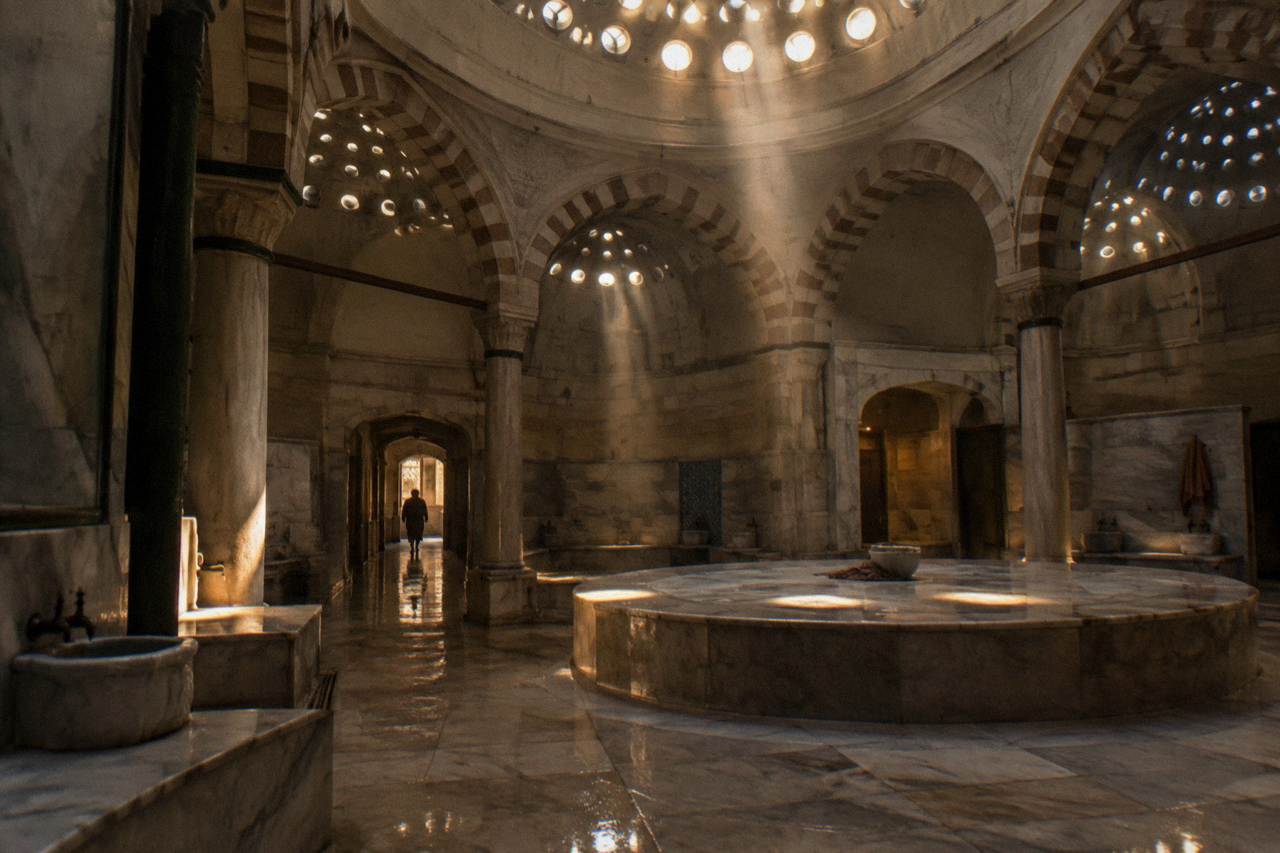
The question sounds simple, and the honest answer is that the hammam has never had a single job. When the great Ottoman bathhouses were built, most homes had no private bathrooms, so the hamam was the place where the city actually got clean. Heat came from the same system the Romans used: hot water and steam channelled under the marble floor, warming the central gobek taşı platform where bathers lie and sweat before the scrub begins.
Bathing brought the city's other needs with it. People met friends there, mothers inspected prospective daughters-in-law there, brides were washed and celebrated there before their weddings, and travelers rested there after long journeys. That social layer never disappeared; Çemberlitaş and Cağaloğlu both still advertise bridal bath and bride hamam celebrations on their official pages today.
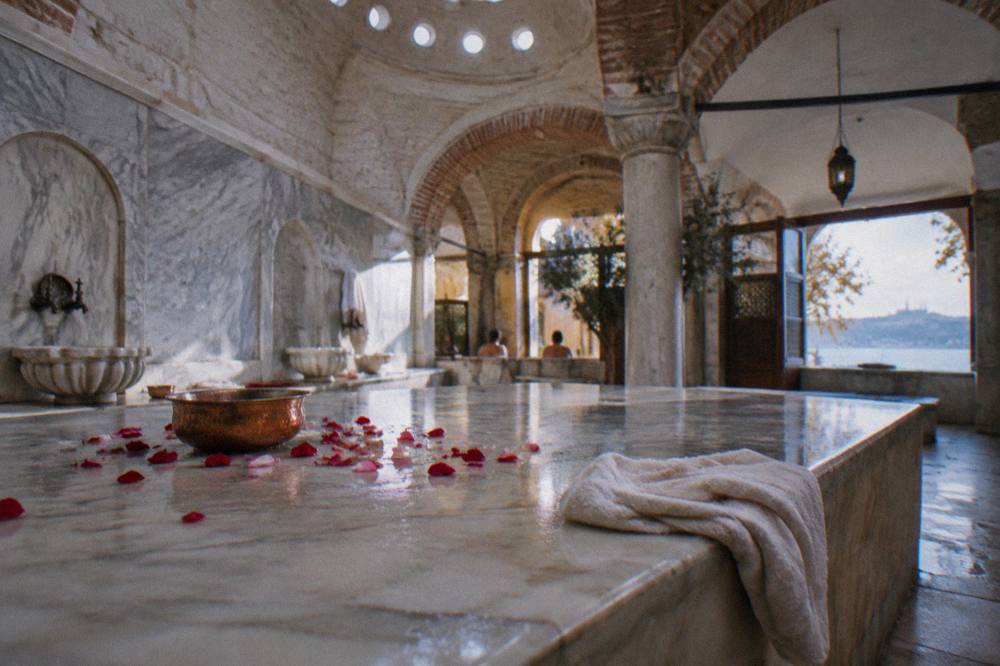
There is also a quieter modern use that surprises first time visitors: the monument visit. Bathhouses by Mimar Sinan still operate in Istanbul, including Çemberlitaş from 1584 and the Ayasofya Hürrem Sultan Hamam, built 1556 to 1557. The architecture is part of the product. People book a scrub partly to stand inside a domed, light-spotted building they could otherwise only peer into.
If you are weighing an actual visit, these three listings cover the range of purposes well, from a neighbourhood bath with a clay mask to a Sinan monument to a hotel spa floor:
The table below breaks the five uses apart so you can see which ones a given bath actually serves.
| Use | What It Involves | Where You See It In Istanbul |
|---|---|---|
| Full body bathing | Kese scrub, foam wash, rinse on the warm marble | Every hamam on the roster |
| Rest and heat therapy | Lying on the gobek taşı, sweating, cooling down slowly | Historic hot rooms and hotel spa floors alike |
| Social gathering | Sharing tea after the wash, group and family visits | Neighbourhood baths such as Acemoğlu and Gedikpaşa |
| Ceremony | Bridal bath and bride hamam celebrations | Advertised by Çemberlitaş and Cağaloğlu |
| Monument visit | Bathing inside a bath built in 1584 or 1741 | Hürrem Sultan, Çemberlitaş, Cağaloğlu, Zeyrek Çinili |
For background on the ritual itself, the companion piece on what a Turkish bath actually is walks through the whole sequence from changing room to tea.
Bathing And The Kese And Foam Cleanse
The core purpose is the cleanse itself: a roughly 15 to 45 minute sequence in which an attendant scrubs the body with a kese mitt, then works olive oil soap into a heavy foam, massages it over the skin and rinses everything away with warm water. On the listings this appears as scrub, foam massage and clay or face mask options. It is the part of the hammam that has no home substitute. To see how that scrub-and-foam ritual plays out when you book a private room instead, read what happens in a private hammam session from start to finish.
The kese is a rough woven mitt, issued new and single use at most baths on this site's roster. Cağaloğlu's listing spells out a private one-use glove; Şifa Hamam lists a one-use kese mitt too. The attendant runs it over skin softened by the hot room, and the rolls of grey residue that come away are the point: surface dead skin that ordinary soap and a shower at home do not lift. The detail on technique, temperature and etiquette is covered in the guide to how kese scrub and foam massage work.
The foam comes next. The attendant soaks a woven pouch in olive oil soap, inflates it with air and squeezes out a blanket of bubbles that gets massaged across the whole body, then rinsed. At Acemoğlu, the package lists the clay mask alongside the scrub and foaming ritual, plus coffee, tea and water, a towel and slippers, with an optional 30 minute massage. On the official Acemoğlu page the walk-in prices are separate from the listing: a 45 minute public bath with foam, scrub and face clay mask is 40 EUR, the pool, sauna and steam room hour is 20 EUR, and a 30 minute classic massage is 50 EUR. Those are operator walk-in prices in euros, while the listing's from $45 per person is a different price type entirely.
Comparing the cleanse packages across the roster shows how wide the spread runs, in both price and review pool:
| Listing | From Price Per Person | Duration | Rating And Reviews |
|---|---|---|---|
| Acemoğlu 15th-Century Hamam | $45 | 45 to 80 minutes | 4.6 from 1,515 reviews |
| Cağaloğlu 1741 Hamam, Standard Packages | $107 | 45 to 135 minutes | 4.8 from 826 reviews |
| Ayasofya Hürrem Sultan Hamam | $124 | 45 to 110 minutes | 4.8 from 578 reviews |
| Old City Private Bath | $51 | 50 to 125 minutes | 4.6 from 4,066 reviews |
Figures are listing from-prices in USD per person; each bath also publishes its own walk-in rates in euros or lira on its official page, and those are separate numbers. Çemberlitaş, for example, prices entrance at 57 EUR, entrance with the 15 minute scrub and bubble wash at 72 EUR, and the luxury package with a 30 minute aromatherapy oil massage at 92 EUR, towel, soap, shampoo and slippers included.
Is the cleanse worth a booking on its own? For most visitors it is the single best reason to go, because it is the one hammam use that cannot be recreated in a hotel bathroom. Everything else on the list, rest, company, ceremony, architecture, arrives around it.
Rest In The Hot Room: The Shape Of A Session
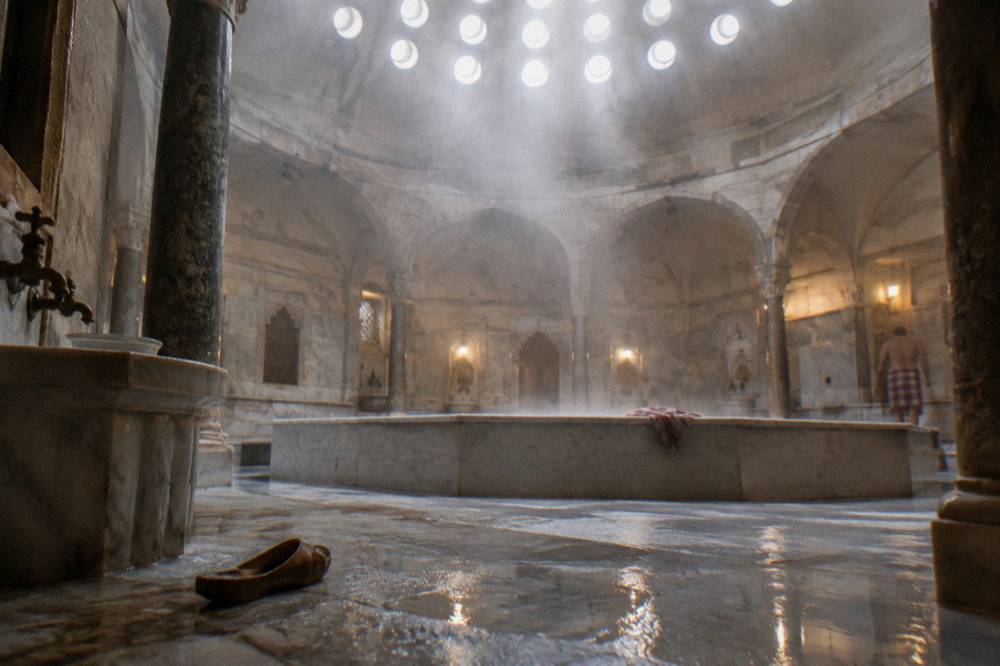
A hammam session is also used as structured rest, and the sequence is more deliberate than it looks. Süleymaniye Hamam's official site describes its 90 minute experience as 15 minutes of preparation and welcome, 30 minutes warming and resting on the marble stone, 30 minutes of kese, peeling, soap wash and massage, and 30 minutes of refreshments, relaxation and changing. Heat, rest, cleanse, rest again.
That four block structure is the hidden logic of every traditional visit. The hot room does the preparation work: lying on the gobek taş while steam rises through the stone opens the skin for the scrub that follows. Süleymaniye publishes its hot room temperature as 38 to 40 C, which is warm rather than scalding, closer to a long bath than a sauna competition. The operator's own description of the session breakdown is on the Süleymaniye Hamam site.
| Stage | Minutes | What Happens |
|---|---|---|
| Preparation and welcome | 15 | Changing, peştemal and slippers, settling in |
| Warming and resting | 30 | Lying on the marble stone, sweating, loosening up |
| Cleanse | 30 | Kese peeling, soap wash, massage |
| Refreshments and change | 30 | Tea or drinks, cooling down, dressing |
Rest is also why durations on the listings vary so much. Acemoğlu runs 45 to 80 minutes, Cağaloğlu 45 to 135, and the private spa products reach 2 hours 30 minutes or 3 hours, because they bolt sauna, pool and massage time onto the core wash. The Old City Private Bath runs 50 to 125 minutes, and its central Old City location keeps the whole visit a rest block rather than a logistics exercise. If your aim is recovery after a long flight or a week of walking the Old City hills, the longer private formats earn their time.
For a fuller walkthrough of the sequence from arrival to tea, the guide to what happens inside a Turkish bath covers each stage in order, including what to bring and what stays in the locker.
Social And Ceremonial Use: The Bridal Bath
The hammam's third purpose is social and ceremonial, and the clearest living example is the bridal bath. Both Çemberlitaş and Cağaloğlu present bridal bath and bride hamam celebrations on their official pages as bookable events, which means the tradition is not a museum piece but a current revenue line at two of the city's most famous baths. Groups book the hamam, the bride is scrubbed and celebrated, and the bathhouse becomes a party venue.
Historically this ran far past weddings. The hamam was one of the few shared public interiors of Ottoman city life, so it absorbed social functions the way cafés and squares did elsewhere: matchmaking inspections, holiday gatherings, mothers' meetings, and celebration feasts carried in by the hamam's own kitchen. Music, candles and henna travelled to the bath with the bridal party, and the ceremony sat inside the same marble rooms used for ordinary washing the rest of the week.
The modern versions are more compact but recognizably the same event. A bride hamam at a grand old bath typically means the group has the hot room, the attendants, the scrub and foam for everyone, and the photographs under the dome. Çemberlitaş, built in 1584 by Mimar Sinan as a foundation for Nurbanu Sultan and still open daily from 06:00 to midnight, markets these celebrations directly, and its official site carries the details. Cağaloğlu does the same from its 1741 building, the last bath constructed in the Ottoman Empire, and its services page lists the same event alongside its regular packages.
Couples and groups who want a shared bath rather than a ceremony have a separate route. The historic baths mostly keep men's and women's sections apart with same gender attendants, so the couple format lives in the private spa products, where a booked room means your own party and no strangers. That split, and which baths sit on which side of it, is laid out in the site's coverage of hamams built for two.
One honest caveat: ceremony bookings are made directly with each bath, not through the standard listings, so treat the listing prices on this page as the price of an ordinary visit, and ask the operator's reservation desk about group and bridal rates.
A Monument Visit: The Hammam As Architecture
The fourth use is the monument visit: many people use a hammam simply to get inside a building they would otherwise only see from the street. Istanbul has working bathhouses by Mimar Sinan, a 1741 imperial bath, and a Sinan building that reopened in September 2023 after a 13 year restoration. Paying for a scrub is often the cheapest legal way to stand under one of these domes for an hour.
The Ayasofya Hürrem Sultan Hamam is the clearest case. It was built by Mimar Sinan in 1556 to 1557 for Hürrem Sultan, the wife of Süleyman the Magnificent, on the site of the ancient Baths of Zeuxippus, wedged between the Blue Mosque and Hagia Sophia. Its afterlife is a lesson in how these buildings get reused: operational as a bath until 1910, then closed, later holding convicts when Sultanahmet Prison overflowed, then storing paper and oil, first restored in 1957 to 1958 and run as a carpet bazaar until 2008, restored again over three years, and reopened as a bath in May 2011. The men's and women's sections were built on the same axis as mirror images of each other, a detail recorded by the Istanbul Convention and Visitors Bureau.
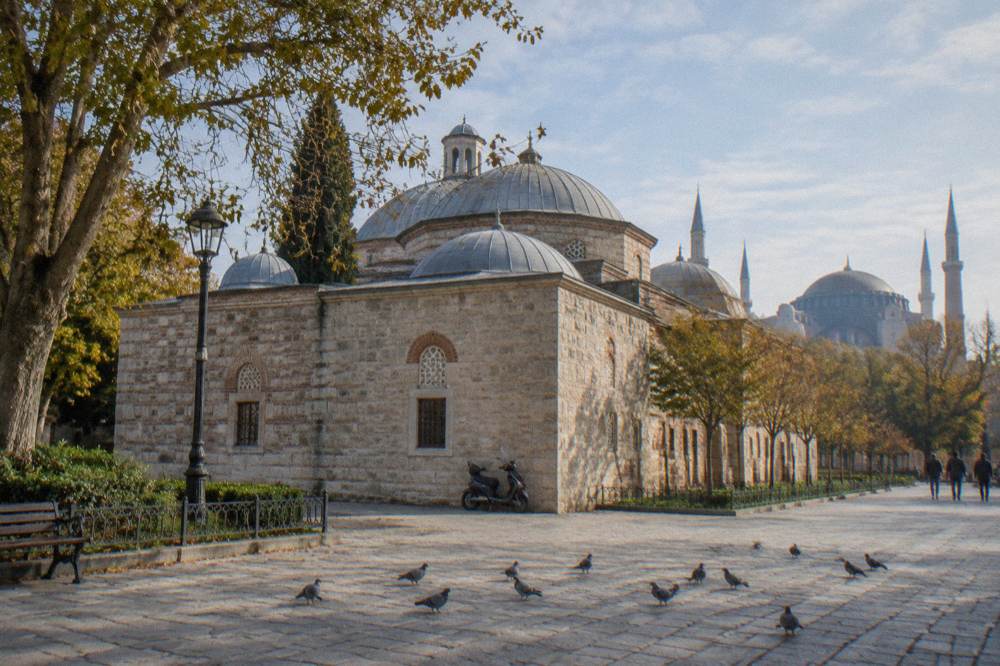
The roster listing for the Hürrem Sultan bath runs from $124 per person, 45 to 110 minutes, 4.8 from 578 reviews, with free cancellation shown on the listing. Official hours and walk-in prices are not stated here; the listing is the source for booking figures.
The monument list does not stop there. Ağa Hamamı in Beyoğlu was built in 1454, the oldest in this site's verified set, and opens every day from 10:00 to 22:00. Zeyrek Çinili, a 1540s Sinan bath, took 13 years to restore and reopened in September 2023; its bathing page prices the 50 minute Original scrub and foam ritual at 125 EUR, with longer packages running 160 to 300 EUR, and it closes on Mondays. Cağaloğlu's six official packages, listed on its services page, run from the 95 EUR Istanbul Dream to the 400 EUR Elixir. None of these are dormant monuments; every one is a working bath where the visit and the cleanse arrive together.
Matching The Bath To Your Purpose
Choosing by purpose works better than choosing by fame. For the plain cleanse at a neighbourhood price, the budget end of the roster starts at $19 per person; for a Sinan monument, book Hürrem Sultan or Çemberlitaş; for rest with sauna and pool, the private spa products run 50 minutes to 3 hours; for ceremony, contact the bath directly. Review pools matter too, and they range from 4,066 reviews to brand new listings with none.
The site's own comparison work suggests a simple filter. Decide whether the visit is about the cleanse, the rest, the company or the building, then read the listing's inclusions against that one goal. Acemoğlu's package, from $45 with a clay mask, scrub, foaming ritual and drinks included, covers the cleanse thoroughly. The Five-Star Hotel Hammam's three tiers, from $34, even include a DIY option with no therapist, just the scrub glove and the private room, which is the purest rest and heat use on the roster. The Grand Bazaar Walk Plus Hamam, from $84 and 3 hours, is a new listing with no reviews yet, aimed squarely at visitors who want the bath attached to sightseeing rather than the other way around.
Budget and history can overlap more than visitors expect. The Süleymaniye-Area Budget Bath costs from $19 per person and sits in the district of Sinan's greatest mosque complex, though it is a separate bath, not the historic Süleymaniye Hamam itself, which takes direct reservations only. That distinction, between a monument and a bath near a monument, is the single most common booking mistake in this category, and it is worth a minute on the map before paying.
Whether any of this adds up to a good use of an afternoon in Istanbul is a fair question, and the honest answer for most travelers is that the cleanse plus the building beats either one alone. The Hamam In Istanbul site exists to make that comparison concrete, with verified operator figures beside every listing price.
Before the closing questions, here is the full trio once more, picked to span the purposes this article covers: the neighbourhood cleanse, the Sinan monument, and the private spa rest.
Common Questions About Hammam Use
What Is Hammam Used For?
A hammam is used for full body bathing with a kese scrub and foam wash, for rest and heat therapy on the warm marble, for social gatherings, for ceremonies such as the bridal bath, and for visiting historic architecture. In Istanbul all five uses are live today at working bathhouses.
Is a hammam only for washing?
No. Washing is the core service, but the hot room rest, the post-bath tea, the social visit and the ceremonial uses are built into the format. Many visitors book primarily for the rest or the building and treat the scrub as the bonus.
Can you still book a bridal bath in Istanbul?
Yes. Çemberlitaş and Cağaloğlu both present bridal bath and bride hamam celebrations on their official pages. These group events are arranged directly with each bath's reservation desk rather than through standard visitor listings.
How long does a hammam visit take?
It depends on the product. Roster durations range from about 45 minutes at the quick end to 3 hours for combos and private spa formats. Süleymaniye structures its own 90 minute visit as four 15 to 30 minute blocks from welcome to change.
Can you visit a hammam just to see the building?
Working baths generally do not sell sightseeing entry, so the practical route is to book the basic package. At from $19 to $45 per person on the budget listings, the cheapest scrub doubles as access to domes and marble you could not otherwise enter.
Do you bathe with others or privately?
Historic hamams mostly run separate men's and women's sections with same gender attendants. Private spa products offer booked rooms for couples and groups instead, and some historic baths, Süleymaniye among them, host mixed family hours by reservation.