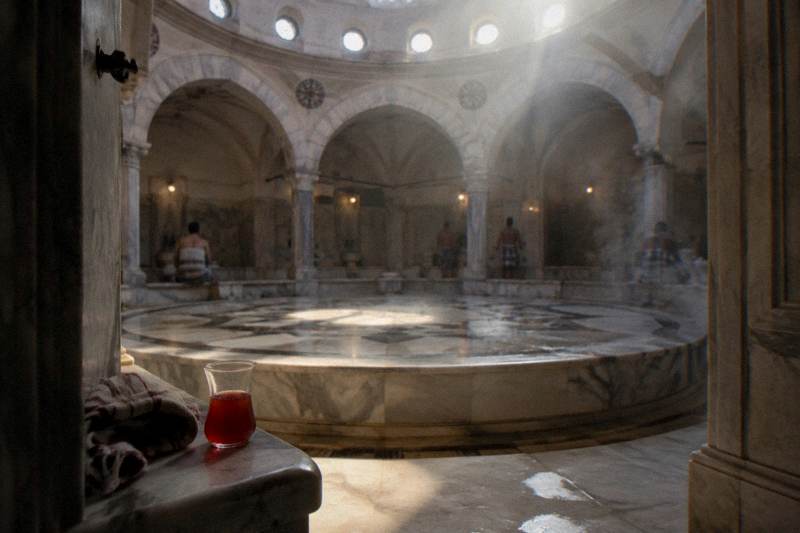
What Are The Rules For The Turkish Bath?
The house rules Istanbul hamam operators actually publish: reservations, age limits, pregnancy advice, swimwear, separate hours for men and women, and what to do on arrival.
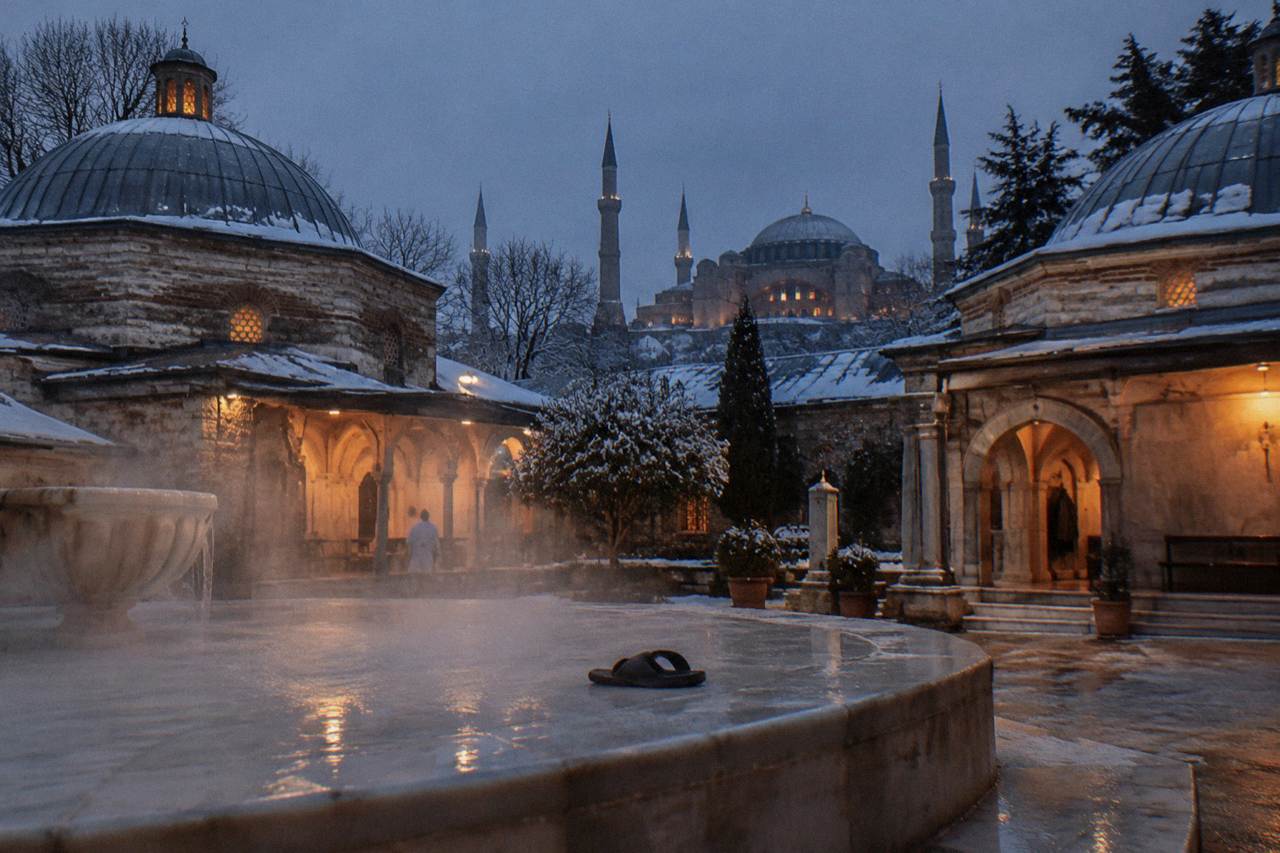
What Are The Rules For The Turkish Bath?
The rules for the Turkish bath are set by each operator, but the pattern is consistent across Istanbul: reserve ahead at the reservation-only baths, respect the minimum age (6 at Cağaloğlu, 16 at Süleymaniye), expect separate sections or separate hours for men and women, bring or borrow swimwear if you prefer it, and skip the bath entirely if you are pregnant or have a heart condition. None of this is secret. The historic operators publish their policies on their own reservation pages, and the differences between them matter more than most first-time visitors expect. A bath that welcomes families in a shared hall runs on different rules than a 1741 monument that admits no one under 6 and no pregnant guests at all. That gender split raises the question first-time visitors ask most, and our guide to who can actually visit a hammam explains exactly how Istanbul's historic baths welcome women through separate sections and women-only hours.
The useful way to read these rules is as a set of questions you would ask at any spa, translated into the Istanbul hamam context. Who can book, who cannot enter, what you wear, who bathes where, and what the attendants will and will not do for you. The answers come straight from operator pages and from the bookable listings themselves, not from forum folklore, because the folklore is where most of the invented rules live. There is no official photography ban printed by the operators covered here, no mandatory dress code beyond what each bath hands you at the door, and no published tipping percentage anywhere in the official material.
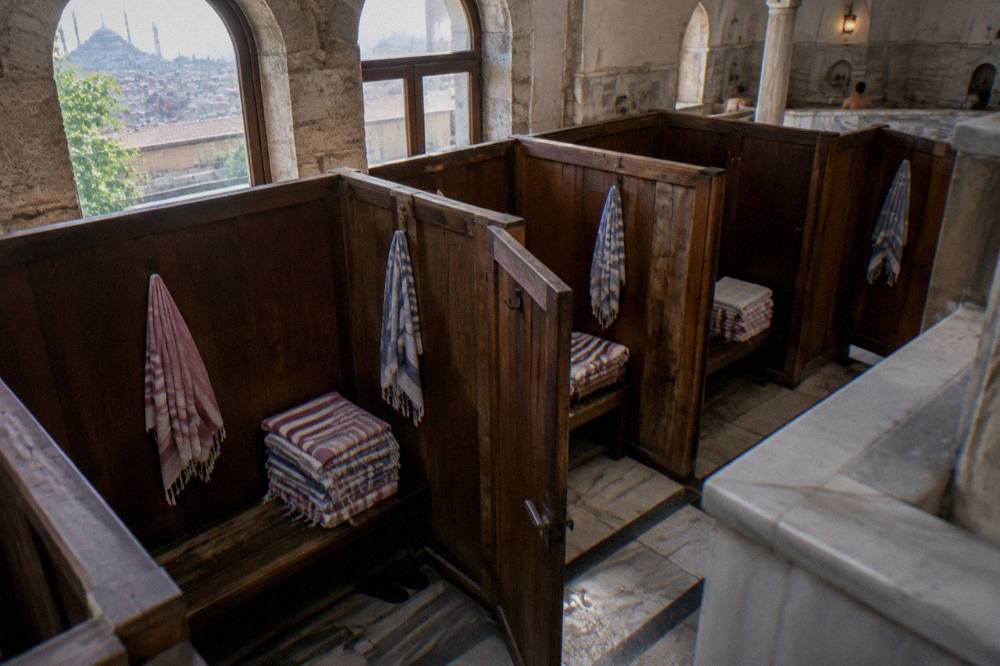
The practical stakes are real. Turn up at a reservation-only bath without booking and you may be turned away at the door, since one operator advises reserving two to three days ahead. Arrive at the wrong hour at a sex-segregated bath and the section you want will be closed. Assume every bath is couples-friendly and you will discover that one of the most famous hamams in the city states plainly on its services page that it has no couple service at all. The rules below are grouped the way you will actually meet them, in the order you will meet them, from booking to the moment you sit down on the warm marble.
If you want a shortcut, three bookable options span the rule spectrum: a budget-friendly bath with a privacy option, the classic 1741 monument with the strictest entry policy, and a couples bath built around sharing the ritual. We compared the listings, and they are a good map of what the rules allow.
Do You Need A Reservation Before You Go?
At some baths, yes, and the operators say so themselves: Süleymaniye Hamam requires reservations and advises booking two to three days ahead, while Çemberlitaş, Ağa and Galatasaray publish long daily hours that suggest walk-ins work outside peak times. Kılıç Ali Paşa runs fixed sex-segregated sessions with last-reservation cutoffs, which in practice means booking. The rule of thumb is simple: the more the bath structures your time on a schedule, the more it needs a reservation. A bath that baths you on arrival in a hall open from six in the morning to midnight has room for spontaneity. A bath that assigns you a session, a section and an attendant does not.
Süleymaniye is the clearest case. Its own site states that reservations are required and that the bath is not suitable for single travelers during its primary mixed hours, because those hours are built around couples and families bathing together in a shared setting. Booking two to three days ahead is the operator's advice, not a travel writer's guess. The same site notes that all attendants are male and that guests are welcome to bring their own swimwear, both of which shape who the bath works for.
Kılıç Ali Paşa in Tophane publishes its structure on its contact page: women-only hours from 08:00 to 16:00 with the last reservation at 14:15, and men-only hours from late afternoon to 23:30 with the last reservation at 22:00. When a bath cuts off reservations nearly two hours before the session ends, arriving on spec is a gamble. The fixed sessions exist so each group gets the full ritual, and a walk-in at 15:30 simply has no slot.
The bookable listings handle this problem for you. A listing with a time slot is, in effect, a reservation with a confirmation, and most of the roster shows free cancellation on the listing, usually up to 24 hours before. That is a different kind of rule than the walk-in baths impose, and it favors planners.
For a mid-range walk-in-friendly option, the Gedikpaşa listing is worth a look before you commit: it runs about an hour, rates 4.9 from 1,970 reviews, and includes a private changing room with a private section if you select that option, with the price shown on the live booking page. Check availability if a private changing room sounds like the rule you care most about. Our longer walkthrough of what happens inside a Turkish bath covers the ritual itself from door to finish.
What Are The Age Rules At Istanbul Hamams?
Age rules vary sharply by operator: Cağaloğlu does not allow children under 6 and requires an adult to accompany anyone under 18, Süleymaniye admits no one under 16 at all, and Kılıç Ali Paşa explicitly prices children aged 4 to 12 at 3,000 TL with infants 0 to 3 free, making it the most openly family-friendly of the historic baths. There is no city-wide age law. Each operator sets its own floor based on the heat, the layout and the kind of quiet the bath wants to keep, so the age rule is genuinely a reason to choose one bath over another when you are traveling with kids.
The strictest policy belongs to Cağaloğlu Hamamı, the 1741 bath in the Old City. Its reservation page states three rules plainly: pregnant guests are not accepted, children under 6 are not allowed, and guests under 18 must be accompanied by an adult. The same page advises against use by guests with heart disease, diabetes or asthma. That is a lot of policy for one bath, and it reflects a monument with a fixed service rhythm rather than a flexible spa.
Kılıç Ali Paşa takes the opposite approach by publishing child pricing, which no other historic operator in this list does. At 3,000 TL for ages 4 to 12 and free for infants, the bath is signaling that families are expected, not merely tolerated. Süleymaniye sits in the middle with its under-16 cutoff, paired with its couples-and-families shared setting, so the bath is family-oriented but only for teenagers and up.
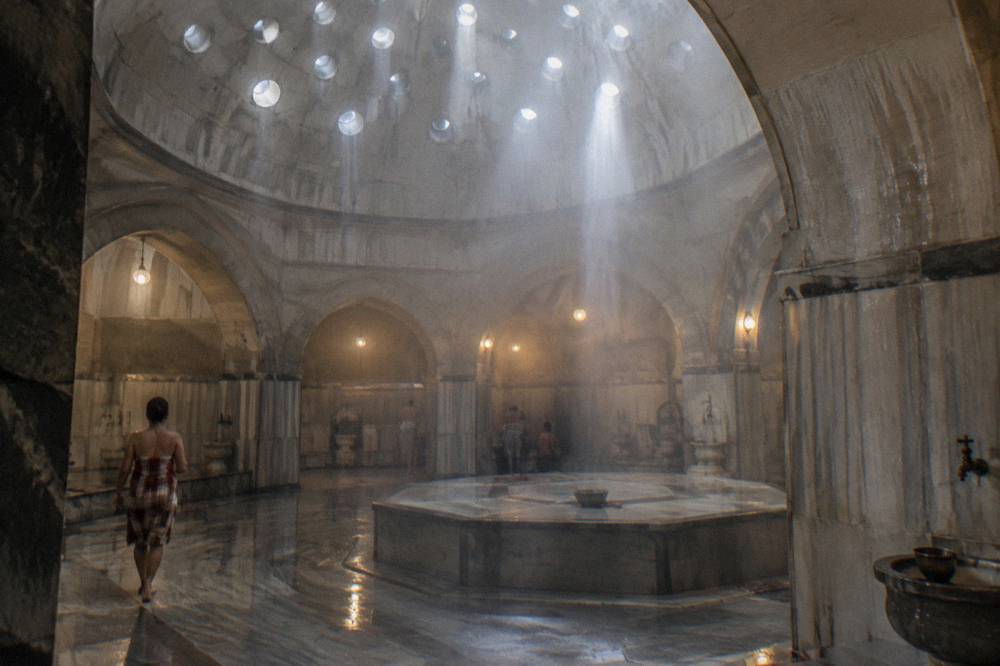
The bookable side mirrors this spread. Several listings carry their own age gates in their suitability notes, so read the listing before you book rather than after. The Cağaloğlu standard package, from $107 per person and rated 4.8 from 826 reviews, carries the operator's own age and health restrictions onto the booking page, which is where you want to discover them.
| Operator | Minimum age | Family pricing | Source of the rule |
|---|---|---|---|
| Cağaloğlu Hamamı | Under 6 not allowed, under 18 with an adult | None published | Official reservation page |
| Süleymaniye Hamam | Under 16 not admitted | None published | Operator site |
| Kılıç Ali Paşa Hamamı | Children 4 to 12 welcome | 3,000 TL ages 4 to 12, infants 0 to 3 free | Official reservation page |
| Çemberlitaş Hamamı | None stated | None published | Official site |
Can You Go To A Hamam While Pregnant?
Most Istanbul operators either bar pregnant guests or advise against the bath in pregnancy: Cağaloğlu states pregnant guests are not accepted, Süleymaniye does not recommend it, Kılıç Ali Paşa's FAQ says pregnant women are not served, and several bookable listings list pregnancy under not suitable. This is one rule where the operators are nearly unanimous, and the reason is the heat itself. A hamam hot room is a sustained warm environment, and Süleymaniye publishes its heat as 38 to 40 C, which is the kind of figure that explains why the policy exists without anyone needing to speculate.
The exact wording differs by operator, and the wording matters. Cağaloğlu's reservation page is a flat rule: pregnant guests are not allowed to receive services. Kılıç Ali Paşa's FAQ frames it as a service decision: pregnant women are not served. Süleymaniye uses recommendation language, pairing pregnancy with heart conditions, asthma and blood pressure problems as reasons the bath is not recommended. On the bookable side, listings for Cağaloğlu, the Hürrem Sultan bath, Şifa and several hotel spa products all list pregnant women under not suitable.
The honest summary for anyone pregnant or recently pregnant is that this is a ask-a-doctor question first and an operator-policy question second, and the operators themselves frame it that way. No bath in the verified material offers a modified pregnancy service, and none claims a benefit. What the rules give you is a clear no at some baths and a strong caution at others, with no gray area worth gambling an afternoon on. If you want the fuller picture on heat, health warnings, and who should skip the hammam entirely, the balanced guide to hammam safety covers what operators themselves say.
The same heat logic explains the health advisories that ride alongside the pregnancy rules. Cağaloğlu advises against use by guests with heart disease, diabetes or asthma and takes no responsibility for related issues, which is about as direct as a policy page gets. If you have a condition on one of those lists, the rule is not an obstacle to argue with, it is information the bath owes you before you sweat.
What Should You Wear Inside A Turkish Bath?
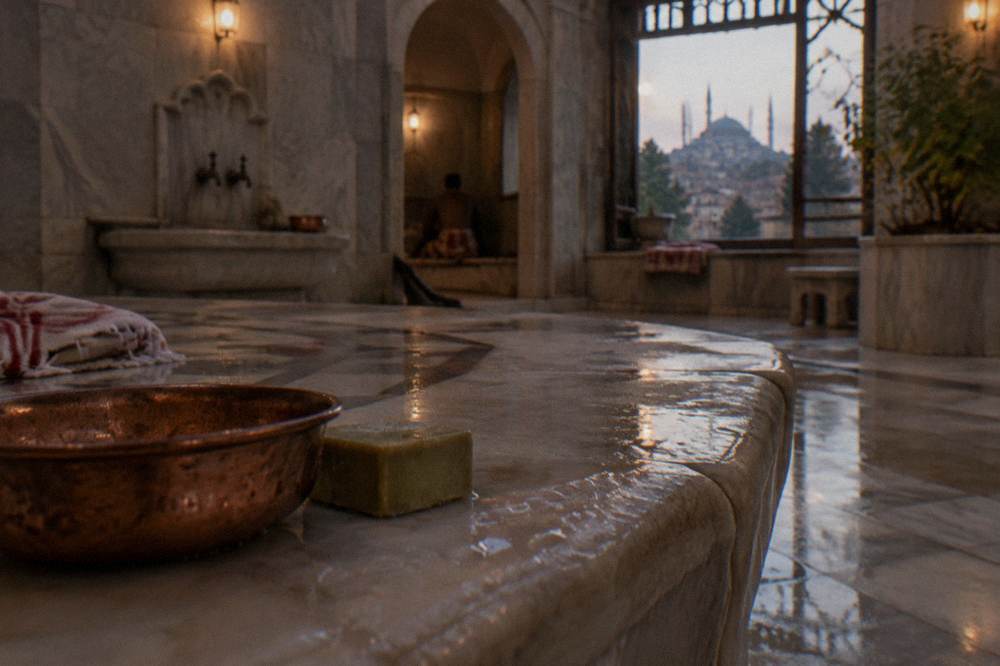
The operators publish a permissive rule: Çemberlitaş and Süleymaniye both state guests may bring their own swimwear, and every bath supplies the basics, with peştemal cloths, towels and slippers included in the entrance or package price at the major hamams. The invented version of this rule, a mandatory dress code that demands near-nudity, does not appear in any operator material. What the operators actually say is that you will be handed a peştemal, the thin woven cloth worn in the hot room, and that wearing your own swimwear underneath or instead is explicitly welcome.
Süleymaniye spells this out in the most detail, and it is worth reading closely because it covers women and men differently. The bath provides peştemal, towels, slippers, bikini or shorts for women and shorts for men, and states that guests may bring their own swimwear. That is a full wardrobe policy published by the operator, and it removes the guesswork. Çemberlitaş confirms the same permission in its FAQ: guests may bring their own swimwear, in a dual bath with separate men's and women's sections and same-gender attendants.
The package inclusions tell the rest of the story. At the tourist-standard hamams, the entrance price covers towel, soap, shampoo and slippers, so the only garment decision you actually face is swimwear or peştemal, not what to buy. Cağaloğlu's foam package listing itemizes it down to one-use slippers, towels, the traditional breechcloth, olive oil soap and linden shampoo. The rule, in practice, is that the bath dresses you.
One clothing rule is real and structural rather than sartorial: jewelry and watches come off, valuables go into the locker or changing cabin, and the entrance at Çemberlitaş includes the changing cabin as part of the deal. This is standard spa practice everywhere, but in a hamam you will be handled by an attendant during the scrub and foam, so anything loose on your body is a problem you create for yourself.
For a fuller unpacking of the ritual around the dress question, what a Turkish bath package includes breaks down the inclusions line by line, from kese glove to tea.
Are Men And Women Bathing Separately?
Yes, at every historic hamam in this list: Çemberlitaş and Kılıç Ali Paşa run separate men's and women's sections with same-gender attendants, Kılıç Ali Paşa separates by hours rather than by hall, and Süleymaniye baths couples and families together in a shared setting during its primary hours, with women-only and men-only blocks also in place. The Hürrem Sultan bath's architecture makes the separation physical, its men's and women's sections built on the same axis as mirror images of each other. Mixed bathing in Istanbul is not a hamam tradition; it is a spa product, and it lives mostly in private-suite hotel spas and in the rare couples bath. The same logic governs who does the scrubbing, and our guide to which attendants scrub which guests at Istanbul's hamams covers the one famous exception.
The two structural models matter for planning. At Çemberlitaş, both sections run at once, daily from 06:00 to 00:00, so a couple can arrive together and simply split at the door. At Kılıç Ali Paşa, the split is temporal: women-only from 08:00 to 16:00, men-only from late afternoon to 23:30. A couple cannot bathe at the same time there, full stop, and that is a rule of the building's schedule rather than a preference.
Süleymaniye is the outlier that proves the range. Its shared mixed setting during primary hours is built for couples and families, with male attendants for everyone, and the operator notes it is not suitable for single travelers during those hours. The site lists women-only and men-only hour blocks as well; check the operator's contact page for the women-only and men-only hour blocks before you plan around them, since the blocks are the one schedule the bath adjusts.
The couples alternative on the bookable side is Çukurcuma Hamamı in Beyoğlu, an 1831 building whose listing is built around two people sharing the bath, from $103 per person for about two hours, rated 5.0 from 188 reviews. It exists precisely because the historic baths mostly cannot offer this.
| Operator | How the sexes are separated | Shared option | Published hours |
|---|---|---|---|
| Çemberlitaş Hamamı | Separate sections, same-gender attendants | No | Daily 06:00 to 00:00 |
| Kılıç Ali Paşa Hamamı | Separate hours: women 08:00 to 16:00, men late afternoon to 23:30 | No | Daily, split sessions |
| Süleymaniye Hamam | Couples and families share in primary hours; single-sex blocks exist | Yes, by reservation | Reservation required |
| Ağa Hamamı | Not stated on the operator page | Not stated | Daily 10:00 to 22:00, arrive by 20:00 |
| Galatasaray Hamamı | Not stated on the operator page | Not stated | Daily 09:00 to 21:00 |
One more separation rule deserves its own sentence: Cağaloğlu's official services page states there is no couple service, so a couple booking there should expect to be bathed apart in the separate sections. That single line settles a question travelers routinely get wrong.
What Are The Health Rules Operators Actually State?
The operators state three kinds of health rules: outright refusals, cautions and heat disclosures. Cağaloğlu bars pregnant guests and advises against heart disease, diabetes and asthma; Süleymaniye discloses a 38 to 40 C hot room and does not recommend the bath for pregnancy, heart conditions, asthma or blood pressure problems; several listings add their own not-suitable lists, including children's age floors and mobility notes. These are operator statements, not medical claims, and the honest reporting position is to pass them along without adding benefits or risks the operators do not claim.
The disclosure that anchors everything else is the temperature. Süleymaniye's 38 to 40 C figure is the only published hot-room temperature in the verified set, and it converts an abstract warning into a number you can reason about. Cağaloğlu goes further than most by stating it takes no responsibility for issues arising from the conditions it flags, which is a strong form of the rule: the bath tells you who it is not for, and the choice after that is yours.
On the bookable side, the not-suitable lists function as the health rules. The Şifa listing flags pregnancy, diabetes, heart problems and children under 6. The Hürrem Sultan listing flags pregnancy, wheelchair users, visually impaired guests and children under 6. A hotel-spa product near Hagia Sophia bars children under 12, pregnant guests and people with heart problems. None of these lists is medical advice; all of them are the operator's own gate, and the listing is where they are enforced.
The gap in the record matters too. There is no verified operator rule about shaving, alcohol, eating before the bath or any of the folk-etiquette items that circulate online, and no verified photography rule from any operator in this set. If a bath has such a rule, it is not on the pages the operators publish, so treat any version you read elsewhere as unverified and ask at the desk.
What Should You Actually Do On Arrival?
On arrival the rule sequence is fixed by every operator in the set: check in, change in a cabin or private room, lock valuables, take the peştemal and slippers you are given, and wait to be led to the hot room, where you warm up on the marble before any scrub or foam begins. Nothing in this sequence is negotiable at a traditional bath, and nothing in it requires prior knowledge. The attendants run the order; your job is to arrive, undress to the level the bath's swimwear rule allows, and let the building's rhythm take over.
The warming stage is the part first-timers most often try to skip, and the structure explains why they should not. Süleymaniye publishes its 90-minute experience as a sequence: 15 minutes of preparation and welcome, 30 minutes warming and resting on the marble stone, 30 minutes of kese and soap massage, and 30 minutes of refreshments, relaxation and changing. The scrub only works, and only feels tolerable, on a body that has already spent half an hour in the heat.
Money rules at the desk are simpler than the folklore suggests. The operator prices are walk-in prices in TL or EUR, the listing prices are per-person from-prices in USD, and they are different price types for the same ritual: Çemberlitaş, for instance, publishes 57 EUR entrance and 72 EUR with scrub and foam on its own page while the bookable version starts from $124. No operator in the verified set publishes a tipping rule, so if you want to tip the attendant, ask at the desk rather than applying a percentage you read online (see Hammam Tipping).
| Stage | What the rule is | Who states it |
|---|---|---|
| Booking | Reservation required at Süleymaniye, 2 to 3 days ahead advised | Operator site |
| Entry | Age floors: none under 6 at Cağaloğlu, none under 16 at Süleymaniye | Official reservation pages |
| Changing | Cabin or private room included; valuables locked | Operator and listing inclusions |
| Dress | Peştemal, towels and slippers provided; own swimwear welcome | Çemberlitaş FAQ, Süleymaniye site |
| The ritual | Warm up on marble first, then kese and foam | Süleymaniye's published session structure |
The last arrival rule is the one people forget: build in the time the ritual actually takes. Durations across the bookable roster run from about 45 minutes at the shortest Cağaloğlu option to around two and a half hours at the private-suite products, and a couple of baths in this set, from Hamam In Istanbul's roster angle at least, are best treated as half a day with the relaxation period included. Rushing a hamam violates the only unwritten rule every operator shares.
Common Questions About Turkish Bath Rules
What Are The Rules For The Turkish Bath?
The core rules are per-operator: reserve ahead where required, respect the age floor (under 6 barred at Cağaloğlu, under 16 at Süleymaniye), accept separate sections or separate hours for men and women, use the provided peştemal or your own swimwear, and do not attend if pregnant or advised against it for heart, diabetes or asthma reasons. Every rule in this list comes from an operator's own published policy.
Do You Need To Book A Turkish Bath In Istanbul In Advance?
At Süleymaniye, yes, and the operator advises reserving two to three days ahead. At Kılıç Ali Paşa, sessions and last-reservation cutoffs make booking the practical choice. Çemberlitaş, Ağa and Galatasaray publish long daily hours where walk-ins generally work outside peak times.
Can Pregnant Women Go To A Turkish Bath?
Generally no. Cağaloğlu states pregnant guests are not accepted, Kılıç Ali Paşa says pregnant women are not served, Süleymaniye does not recommend it, and several bookable listings list pregnancy under not suitable. Ask a doctor before any heat-based spa visit, and expect a refusal at the historic baths.
Do You Have To Be Naked In A Hamam?
No operator in the verified set requires nudity. Baths hand you a peştemal, towels and slippers, and both Çemberlitaş and Süleymaniye explicitly welcome your own swimwear. Süleymaniye provides bikini or shorts for women and shorts for men alongside the standard items.
Are Men And Women In The Same Room At A Turkish Bath?
At the historic baths, no: Çemberlitaş uses separate sections, Kılıç Ali Paşa uses separate hours, and the Hürrem Sultan bath was built with mirrored sections. Süleymaniye is the exception, bathing couples and families together in its primary mixed hours. Private-suite spa products and couples baths like Çukurcuma offer shared bathing as a separate product type.
Is There A Photography Rule At Istanbul Hamams?
No photography rule appears in the verified operator material for the baths covered here, so there is no published policy to quote. The safe rule is the universal one: ask at the desk before taking a camera into a changing area or a bath hall full of undressed guests.