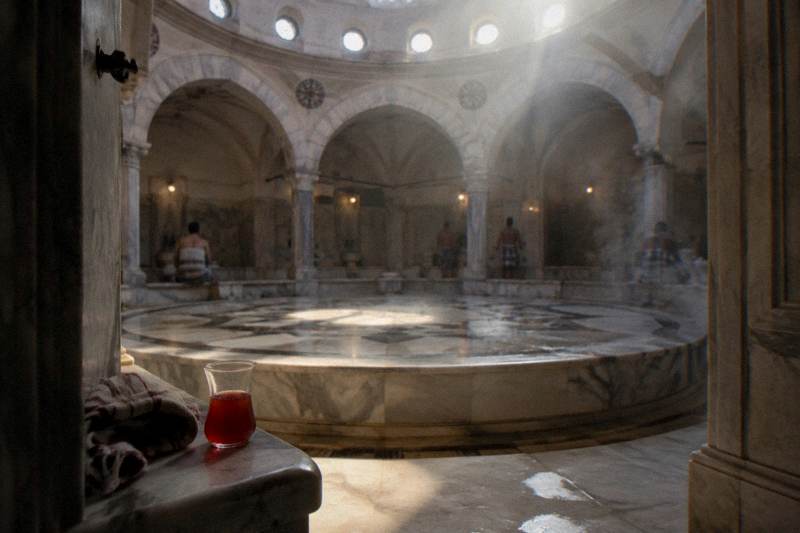
Is Hammam Good Or Bad For You?
A balanced look at hammam safety using only what the operators themselves publish: who each bath warns off, what the heat does, and when to ask a doctor first.
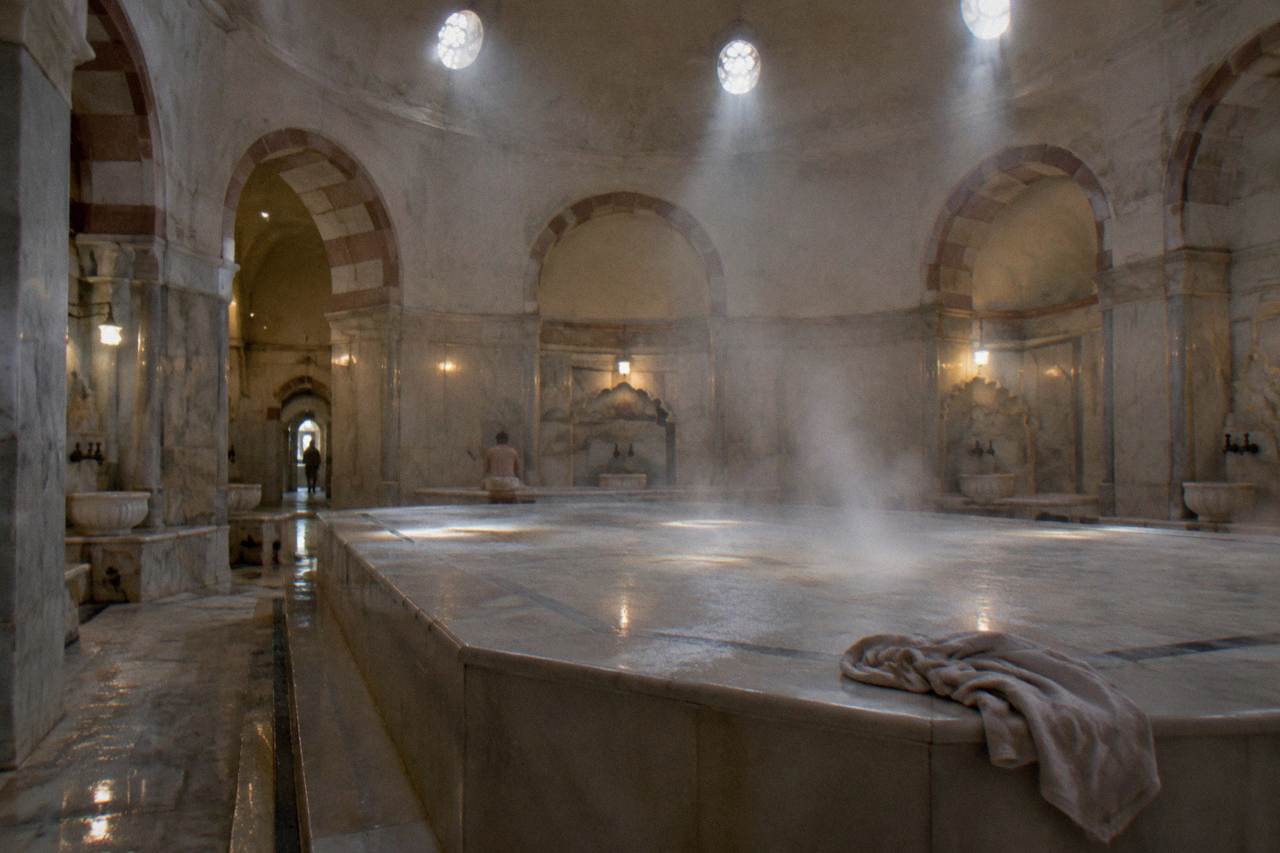
Is Hammam Good Or Bad For You?
Neither, in the way the question usually gets asked. The hammam is a heat and bathing ritual, and the operators who run it publish caution lists rather than promises: heart conditions, asthma, diabetes, epilepsy, allergies, skin problems and pregnancy all appear on official warning pages. For a healthy adult the answer is generally fine; for anyone on those lists the operators themselves say to consult a doctor before booking.
That answer is deliberately boring, and it is the truthful one. This site reports on Istanbul's baths, and the claims you will read on wellness blogs, about detox, calorie burn, circulation boosts or stress relief, are not the kinds of statements the hamams themselves make. What the operators do publish, on their own reservation and FAQ pages, is a list of who should stay away or check with a physician first. Those lists are specific, they name conditions, and they are the closest thing to an authoritative answer the industry offers.
So this article works only from those official cautions. Cağaloğlu Hamamı, the 1741 bath near the Grand Bazaar, states plainly that it advises against use by guests with heart disease, diabetes or asthma, and that it takes no responsibility for related issues, on its official reservation page. Süleymaniye Hamam says its hall runs at 38 to 40 degrees and that the experience is not recommended for pregnant guests or people with heart conditions, asthma or blood pressure problems. Kılıç Ali Paşa's FAQ adds its own list: epilepsy, asthma, allergies, muscle or joint problems, skin problems and recent sunburn. If you want the short version, it is this: the hammam is neither a cure nor a hazard by default, it is a hot room with an attendant, and your own medical picture decides which side of the question you land on.
If your situation is clear and you want to book something, these three listings cover the main formats on this site, from a hotel-transfer visit to a private suite and a privacy-option traditional bath:
What The Operators Themselves Warn About
The three official caution lists overlap but do not match. Cağaloğlu names heart disease, diabetes, asthma and pregnancy. Süleymaniye names heart conditions, asthma, blood pressure and pregnancy. Kılıç Ali Paşa names epilepsy, asthma, allergies, muscle or joint problems, skin problems and sunburn. Treat the combined list as the working answer, and treat your own doctor as the referee.
It is worth being precise about who says what, because the differences are informative. Cağaloğlu's list is metabolic and cardiovascular: heart disease, diabetes, asthma, no pregnancy, no children under six, and under-18s only with an adult. Its reservation page states that the bath takes no responsibility for issues arising from those conditions, which is an unusually direct way of putting it. Süleymaniye's caution is built around heat tolerance, which makes sense given the operator publishes its hall temperature, 38 to 40 C, on the same site. Kılıç Ali Paşa's FAQ is the most granular of the three, and it is the only official list that mentions epilepsy, allergies and skin conditions including sunburn.
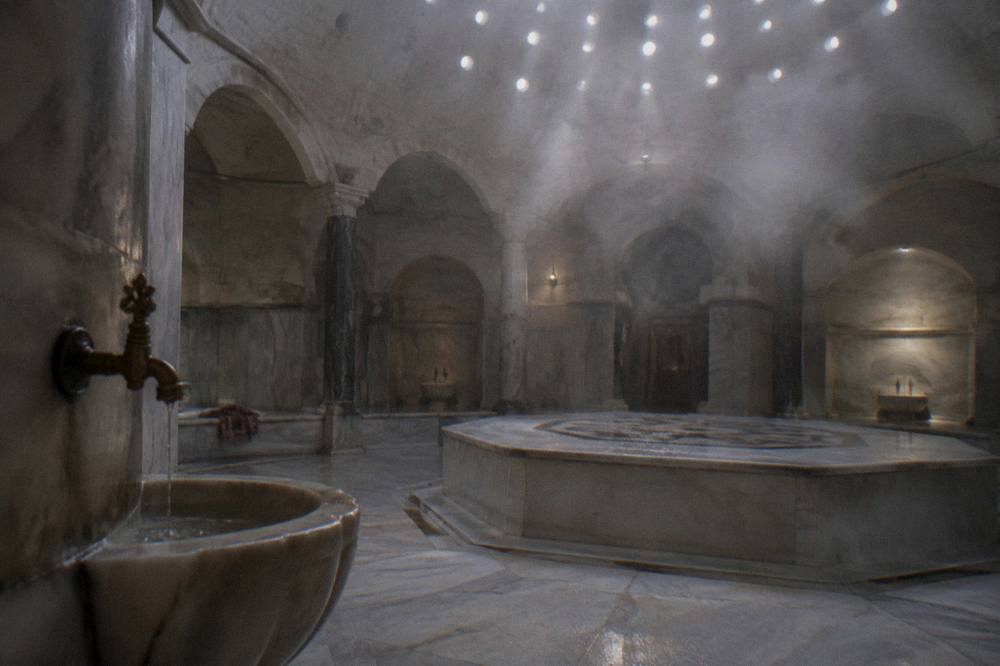
Here is the combined picture from the operators' own pages, each row traceable to the bath that published it:
| Bath | Official caution list | Source |
|---|---|---|
| Cağaloğlu Hamamı (1741) | Heart disease, diabetes, asthma advised against; no pregnant guests; no children under 6; under 18 accompanied by an adult | Reservation page, cagalogluhamami.com.tr |
| Süleymaniye Hamam (from 1550) | Not recommended in pregnancy or with heart conditions, asthma or blood pressure problems; under 16 not admitted | Official site, suleymaniyehamami.com.tr |
| Kılıç Ali Paşa Hamamı (1578 to 1580) | FAQ lists epilepsy, asthma, allergies, muscle or joint problems, skin problems and sunburn; pregnant women not served | Official FAQ and reservation page |
Read down that middle column and a pattern appears: nothing on any list is a claim that the hammam harms a healthy person. Every entry is a screening question, a condition the operator does not want to be responsible for supervising. The baths are not hospitals and their attendants are not clinicians, so the operators push the medical judgment back where it belongs, onto the guest and the guest's doctor.
That is also why this site does not reprint the health-benefit lists you see elsewhere. When we compared the listings, not one operator page on this roster claims a therapeutic effect. The roster listings describe what happens, scrub, foam, massage, tea, and list who the product is not suitable for. That asymmetry, specific cautions but no specific promises, is itself the answer to this question.
Who Should Not Book A Hammam
Pregnant guests top every official list: Cağaloğlu, Kılıç Ali Paşa, Süleymaniye and several roster listings all exclude them. Beyond pregnancy, the standing exclusions are children under 6 at several baths, under 12, 13 or 16 at others, and anyone with a heart condition, asthma, diabetes, epilepsy or blood pressure problems. If any of those apply, ask a doctor before booking, not the desk.
Pregnancy is the one place where every operator speaks with one voice, so start there. Cağaloğlu's policy is that pregnant guests may not receive services. Kılıç Ali Paşa's FAQ says pregnant women are not served. Süleymaniye says the experience is not recommended in pregnancy. The booking listings repeat it: the Cağaloğlu, Hürrem Sultan and Şifa products all carry "pregnant women" in their not-suitable lists, and the same appears on hotel spa floors such as the DoubleTree Sirkeci and Grand Hotel de Pera products. There is no ambiguity to navigate anywhere in that chain, and this site has a dedicated piece on the question at can you do hammam when pregnant.
Children are the second axis, and the age cut-offs vary enough to matter when you plan a family visit. Cağaloğlu and the Şifa and Hürrem Sultan listings exclude under-6s. Süleymaniye does not admit anyone under 16 during its mixed primary hours. The five-star hotel hammam product on this roster sets its line at 12, the Şişli Ramada product at 13. Kılıç Ali Paşa is the exception in spirit: it actively prices a children's ritual at 3,000 TL for ages 4 to 12 and admits infants free, so families there are expected rather than tolerated. The lesson is simply to check the specific bath's rule before you promise a child a hammam day.
Cardiovascular, metabolic and heat-sensitive conditions make up the third group, and here the operators are consistent even where their wording differs. Diabetes appears on Cağaloğlu's official caution and on two roster listings' not-suitable lists. Asthma appears on both Cağaloğlu's and Süleymaniye's pages. Blood pressure problems are named by Süleymaniye. Epilepsy appears only on Kılıç Ali Paşa's list, which is a reason to read the whole combined table rather than one bath's version of it. Heat stress is the underlying mechanism that connects them all, and a hall held at 38 to 40 C asks more of a body than a warm shower does.
If you are unsure which side of any of these lines you fall on, the honest move is a short conversation with a doctor before you book, plus a written note of what you were told. The desk attendant cannot make that call for you, and every operator page above says as much in its own way.
Is The Heat Itself A Problem?
The one operator that publishes a number, Süleymaniye, puts its hall at 38 to 40 C, which is warm-room territory rather than sauna territory. Nothing in the official pages frames that heat as dangerous for healthy adults; every heat-related caution is attached to a named condition. Hydration, rest breaks and honesty about how you feel remain the practical controls.
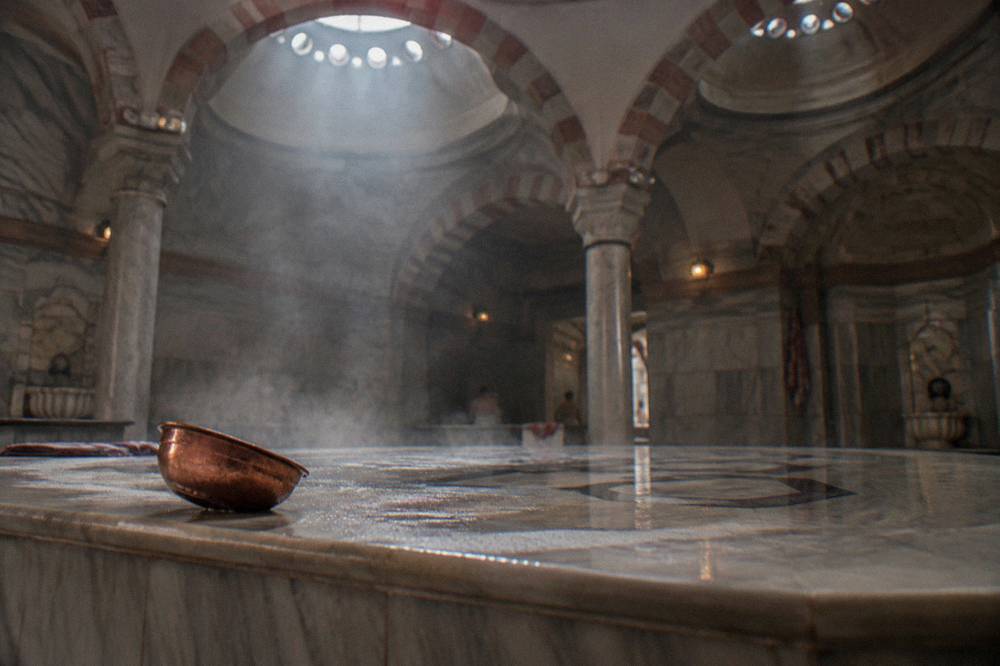
Steam heat behaves differently from dry sauna heat, and the hammam's 38 to 40 C with high humidity is gentler on the airways than a 90 C dry cabin, but the operators do not publish comparisons and neither will this article. What the official pages do support is a tempo argument: Süleymaniye structures its 90-minute session explicitly, with 15 minutes of preparation, 30 minutes of warming on the marble, 30 minutes of scrub and wash, and 30 minutes to cool down with refreshments. That final half hour is not padding, it is the operator building recovery into the product. A guest who skips it to save time is working against the bath's own design.
Alcohol is worth a sentence, though no operator page on this roster publishes a rule about it. The standard advice in any heat setting, hammam or otherwise, is to skip drinking before and during, and to rehydrate after; if you want an operator's position, ask at the desk when you arrive. The same applies to arriving on a full stomach or straight from a long flight. None of this is a medical claim, it is ordinary heat etiquette, and it costs nothing.
The contrast with what a hammam is not helps too. A Turkish bath is not a cryotherapy chamber, a sensory-deprivation tank or a medical spa, and the operators do not market it as one. For a fuller walkthrough of the sequence itself, from changing room to göbek taşı to the tea at the end, see what happens in a Turkish bath. Knowing the sequence in advance is itself a mild safety measure: a guest who knows what comes next stops earlier instead of pushing through uncertainty.
Skin, Sunburn And Allergies
Kılıç Ali Paşa is the only operator whose official FAQ names the skin-level cautions: allergies, skin problems and sunburn. Cağaloğlu's caution list adds diabetes, which has skin implications of its own. Freshly shaved or sunburned skin, eczema flare-ups and product allergies are the practical cases, and the answer in each is the same, tell the attendant before the scrub starts.
The kese mitt is an abrasive, and the foam wash that follows it uses soap. On healthy skin that combination is simply what the ritual is. On burned, freshly shaved, blistered or actively irritated skin it is a bad idea, which is exactly why the operator lists sunburn and skin problems as cautions rather than leaving guests to guess. This site also has a dedicated piece on timing at should you shave before a Turkish bath, where the same reasoning applies.
Allergies get a specific mention on Kılıç Ali Paşa's list, and the practical reading covers scents and oils as much as soap. Several roster products advertise specifics: redbud-scented oil at the Hürrem Sultan listings, olive oil soap and linden shampoo at Şifa, clay and collagen masks as options at Cağaloğlu and elsewhere. A guest with a known fragrance or botanical allergy should treat those named ingredients as the thing to check before booking, since the listing names them openly and the desk can confirm what is in the room on the day. Sensitive guests can also simply decline the optional add-ons; the base scrub-and-foam ritual needs no oils at all.
The table below collects the roster's own not-suitable lists for the most-booked listings, so you can see at a glance which product flags what. These are listing statements, not medical advice, and they repeat the official pages above where the two overlap:
| Listing | Not suitable, per the listing | Extra flags worth knowing |
|---|---|---|
| Cağaloğlu 1741 Hamam, Standard Packages | Pregnant women; children under 6; heart problems; diabetes | Free cancellation on the listing |
| Ayasofya Hürrem Sultan Hamam | Children under 6; pregnant women; wheelchair users; visually impaired people | Redbud-scented oil named in inclusions |
| Şifa Hamam Beside Sultanahmet | Children under 6; diabetes; pregnant women; heart problems | Base ritual has no mandatory oils |
| Five-Star Hotel Hammam, Three Tiers | Children under 12; pregnant women; heart problems | DIY option with no therapist |
| Luxury Hammam, Fatih | Children under 10; pregnant women; heart problems; respiratory issues | Respiratory flag is unusual on the roster |
One row worth pausing on is the Five-Star Hotel Hammam's DIY tier, a no-therapist option with scrub glove and cosmetics. For a guest whose only concern is having a stranger handle their skin, choosing self-service removes that variable entirely while keeping the heat, the room and the ritual.
How To Make A Hammam Visit Gentler On Your Body
The controls are simple: go in hydrated, tell the desk about any condition before the session starts, choose a shorter or private format if the communal heat feels like too much, use the cool-down period, and stop the moment you feel faint or unwell. None of the operators publish contraindication rules beyond their caution lists, so pacing and communication are the guest's levers.
Format choice does a lot of quiet work here. A communal historic bath puts you in the shared hot hall for the full session. A private suite product splits the time across a private bath room, sauna and sometimes a pool, which lets you take breaks without an audience. On this roster, Private Suite Bath, Pool, Sauna runs about 2.5 hours from $46 per person, 4.8 from 145 reviews, with private foaming and scrubbing in 30-minute blocks, so the heat comes in contained doses rather than one long stretch. Its listing shows face mask, pool and massages as optional rather than built in, which also means fewer products on your skin by default.
A traditional bath with a privacy structure offers a middle path. Gedikpaşa Hamam, Privacy Option runs about an hour from $57 per person, 4.9 from 1,970 reviews, and its listing includes a private changing room plus a private section as a selected option. The rhythm of a traditional session, warm, scrub, foam, rest, is unchanged, but the privacy option and the one-hour duration suit a guest who wants the real thing without committing to a long afternoon. Skip a hot tram ride on a summer day: one listing bundles a private hotel transfer from Fatih and Zeytinburnu.
Timing is the remaining lever, and it is more mundane than most guides admit. Weekend afternoons are the busiest slots at the famous baths, a crowded hall is a warmer hall, and a weekday morning session gives you more marble to yourself. For a fuller treatment of timing, see best time to visit Istanbul hamam. What no timing choice can do is override a caution list: if your condition is on the official table earlier in this article, the slot you pick does not change the answer.
A practical pre-visit checklist, drawn from the operator pages above rather than invented for this list: drink water before you leave your hotel, mention any listed condition at the desk on arrival even if you booked anyway, ask which products and scents are in your package if you have allergies, keep the cool-down period, and say something the moment you feel lightheaded rather than after. Attendants at working baths have seen every reaction a hot room produces, and an early word from you is easier for everyone than a late one.
Where A Bath With Hotel Transfer Fits The Health Question
The transfer product answers a logistics problem, not a medical one, but the two connect: a booked pickup removes the walk, the stairs and the summer tram ride between your hotel and the hot room, which matters to guests with mobility or heat limits. Bath Plus Private Hotel Transfer runs 1.5 to 2.5 hours from $68 per person, 4.4 from 159 reviews, with free cancellation on the listing.
That is a modest claim and it should stay modest. No transfer makes a hammam safe for a condition the operators exclude; the caution lists above still govern. Arriving calm and cool instead of sweaty and rushed changes how the first twenty minutes in the hot hall feel, especially for an older guest or anyone recovering from a long travel day. Most hamam visits in Istanbul start with a short walk or a tram ride, so plan to reach the door under your own steam. The listing also places the duration decision with you, since 90 minutes and 150 minutes are different days for different bodies.
The Hamam In Istanbul roster carries the three formats side by side for exactly this comparison, and if you want the direct door-to-door version you can Check availability on the live listing. Read the cancellation terms there while you decide; the listing shows free cancellation, and a doctor's appointment that lands mid-trip is easier to accommodate when the booking can move.
The Honest Verdict
For a healthy adult, nothing any operator publishes describes the hammam as bad for you; every official caution is a screening rule tied to a named condition. For a guest who is pregnant, or who lives with heart, asthma, diabetes, epilepsy, blood pressure, skin or allergy issues, the operators themselves direct you to medical advice first. The good-or-bad question has no universal answer, it has a personal one.
That verdict is weaker than the marketing you will find elsewhere and stronger than the scare stories, because it is the only one the sources support. The operators could publish benefit claims and choose not to. They could also soft-pedal their caution lists and instead they print them on reservation pages where every prospective guest will see them. Both choices tell you something about how these businesses see their own product: as a heat ritual to be enjoyed by the right people at the right pace, not as a treatment.
So take the question literally and answer it for yourself in three steps. First, read the combined caution table in this article and see whether any line applies to you. Second, if one does, ask a doctor who knows your history, and bring the specifics, a hall at 38 to 40 C, roughly an hour to 90 minutes of heat, an abrasive scrub. Third, if you are clear, pick the format that matches your comfort, historic and communal, private and modular, or traditional with a privacy option, and use the cool-down the bath already built for you.
If you are ready to choose, these are the three listings this article has worked from:
Common Questions About Hammam Health And Safety
Is Hammam Good Or Bad For You?
Neither, as a blanket statement. The operators publish caution lists rather than benefit claims: Cağaloğlu advises against use with heart disease, diabetes or asthma, Süleymaniye cites heart conditions, asthma and blood pressure, and Kılıç Ali Paşa's FAQ lists epilepsy, allergies, muscle or joint problems, skin problems and sunburn. For a healthy adult the ritual is generally fine; for anyone on those lists, ask a doctor first.
Can You Use A Hammam While Pregnant?
No operator on this roster allows it. Cağaloğlu states pregnant guests may not receive services, Kılıç Ali Paşa's FAQ says pregnant women are not served, and Süleymaniye does not recommend it. Most booking listings carry the same exclusion.
How Hot Is A Hammam, Really?
Süleymaniye Hamam, the one operator that publishes a figure, puts its hall at 38 to 40 C. That is steam-warm rather than sauna-hot, but the session is long, up to 90 minutes in the structured version, so heat tolerance still decides comfort.
Is A Hammam Bad For Your Skin?
The kese scrub is abrasive by design, which is why Kılıç Ali Paşa's official FAQ lists skin problems and sunburn among its cautions. Healthy skin handles it; burned, freshly shaved or actively irritated skin should wait, and guests with allergies should check the scented oils and soaps named in each listing before booking.
Should You Tell The Bath About A Health Condition?
Yes, at the desk before the session starts. The operators state their cautions but cannot screen you themselves, and Cağaloğlu explicitly takes no responsibility for guests who use the bath against its stated advice. A word before you enter protects you and the attendant alike.
Can Children Go To A Hammam In Istanbul?
It depends on the bath. Cağaloğlu and the Hürrem Sultan and Şifa listings exclude children under 6, Süleymaniye does not admit under-16s, and hotel spa floors set their own lines at 10, 12 or 13 depending on the product. Kılıç Ali Paşa actively serves families, with a children's ritual priced at 3,000 TL for ages 4 to 12.