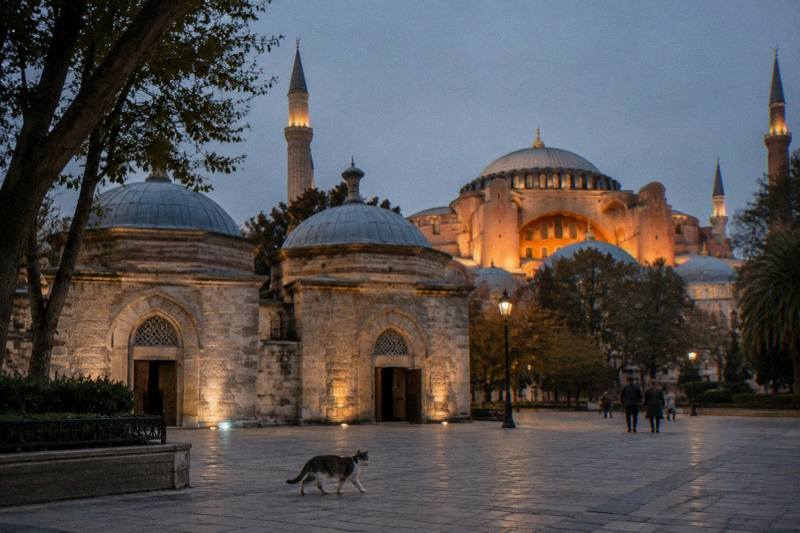
Ayasofya Hürrem Sultan Hamam: Mimar Sinan's Bath Between Two Monuments
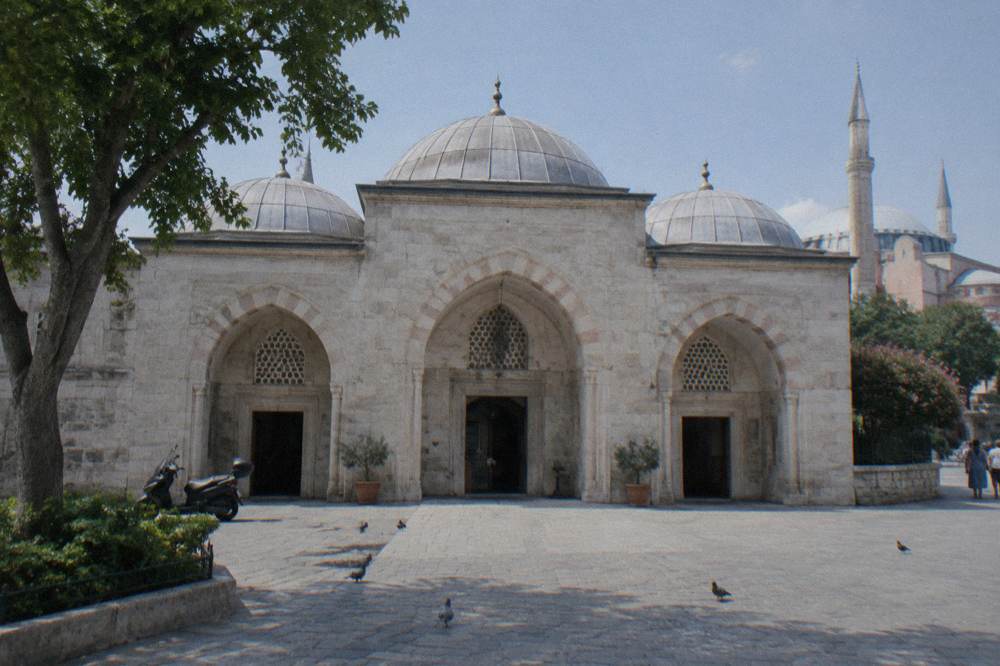
The Ayasofya Hürrem Sultan Hamam sits in the narrow gap between the Blue Mosque and Hagia Sophia, on the site of the ancient Baths of Zeuxippus. Mimar Sinan built it in 1556 to 1557 for the most powerful woman of the Ottoman court, and after a century of other uses it works again as a bathhouse.
Short answer
The Ayasofya Hürrem Sultan Hamam is a 1556 to 1557 Mimar Sinan bathhouse built for Hürrem Sultan between the Blue Mosque and Hagia Sophia. Bookable packages run from $124 per person on the standard listing and from $178 for the Keyf ritual; the operator publishes no verified hours or walk-in prices, so the listings are the reliable source.
There is exactly one spot in Istanbul where you can stand in the shadow of Hagia Sophia, hear the call to prayer from the Blue Mosque, and wash on marble quarried for an empire. The Ayasofya Hürrem Sultan Hamam occupies that spot, a bathhouse squeezed into the plaza between the two most visited monuments in the city. It is not the oldest hamam in Istanbul and not the largest, but it has an origin story no other bath can claim: it was designed by Mimar Sinan, the chief architect of the Ottoman golden age, for Hürrem Sultan, the slave who became the wife of Süleyman the Magnificent.
This guide covers the building's history, what a visit actually involves, what the two bookable packages include, and how the hamam compares with the other historic baths within walking distance. Prices below come from the verified booking listings; the operator's own website has not been reachable for verification, so the listings are the dependable source for current figures.
Who Was Hürrem Sultan And Why Does She Have A Hamam?
Hürrem Sultan, born Roxelana, rose from the imperial harem to become the legal wife of Süleyman the Magnificent, and in 1556 she commissioned Mimar Sinan to build a bathhouse between the Blue Mosque and Hagia Sophia, on the ruins of the ancient Baths of Zeuxippus. It was a statement of power as much as charity, and the building still carries her name.
The story matters because it explains the location. In the Ottoman system, a royal woman of Hürrem's standing funded public works: fountains, kitchens, mosques, baths. A hamam next to Hagia Sophia, then the imperial mosque of a conquered Christian capital, placed her generosity at the exact center of the city's spiritual life. The Baths of Zeuxippus, a famous Roman bathing complex whose marble was stripped during the Fourth Crusade, had stood on or near the site for over a thousand years. Sinan did not build on empty ground; he built on the deepest layered ground in the city.
The verified record from the Istanbul Convention and Visitors Bureau's heritage page gives the design and build dates of 1556 to 1557, the site's ancient predecessor, and the attribution to Sinan, and it is the primary source for all three. Hürrem appears in the historical record as one of the most influential figures of the Ottoman court, and the hamam remains the most tangible object in Istanbul that a visitor can walk into with that story attached. The building itself is the evidence: a royal commission, a royal architect, and a site chosen to face the greatest church of the Byzantine world.
What Happened To The Building Between 1910 And 2011?
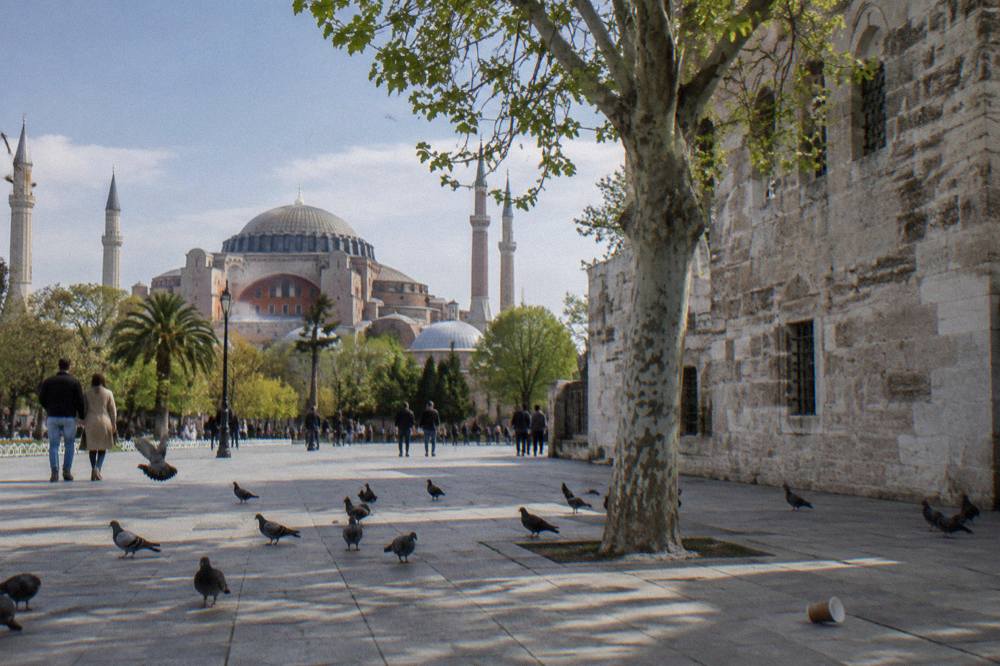
The hamam operated as a bath until 1910, then closed for a century of other uses: the space held convicts when the nearby Sultanahmet Prison overflowed, stored paper and oil, and served as a carpet bazaar after a first restoration in 1957 to 1958. A second, full restoration began in 2008, took three years, and the bathhouse reopened in May 2011 as a working hamam again.
That gap is the reason so many visitors assume the building is a museum. A bathhouse that spent decades selling carpets does not look like a bath, and the 2011 reopening rebuilt the interior as a modern spa inside a Sinan shell. The verified record from the Istanbul Convention and Visitors Bureau notes the first restoration in 1957 to 1958 and the carpet bazaar period that followed, and the three-year modern restoration that ended in 2011. The cost figures floating around secondary sources conflict, so this guide prints none of them.
The full timeline, every date of it drawn from the verified heritage record, reads like this:
| Period | What the building was |
|---|---|
| 1556 to 1557 | Designed and built by Mimar Sinan for Hürrem Sultan |
| Until 1910 | Operating as a public bathhouse |
| After 1910 | Closed as a bath; later held convicts when Sultanahmet Prison was full, then stored paper and oil |
| 1957 to 1958 | First restoration, after which the space was used as a carpet bazaar until 2008 |
| 2008 to 2011 | Three-year modern restoration |
| May 2011 | Reopened as a working hamam |
The practical consequence for a visitor today: the marble, the domes, and the mirror-image plan are Sinan's; the towels, the scheduling, and the package menu belong to a contemporary operator. That mix is common in Istanbul's restored hamams, and it is worth knowing before you arrive expecting a museum piece with ropes and placards. This is a working bath. For a fuller picture of how the city's bathhouses evolved, see our guide to the oldest hamams in Istanbul, which places this bath in the longer timeline.
What Can You Actually Book At The Hürrem Sultan Hamam?
Two bookable packages cover the hamam today: the standard Ayasofya Hürrem Sultan Hamam package from $124 per person, rated 4.8 from 578 reviews, and the Hürrem Sultan Keyf Ritual from $178 per person, rated 4.9 from 179 reviews. Both meet at the bath's entrance on Ayasofya Square, and both show free cancellation on their listings. The operator publishes no verified walk-in prices or hours, so booking ahead is the reliable route.
The standard package runs 45 to 110 minutes depending on the options chosen. The listing includes the traditional body scrub, the bubble wash ritual on warm marble, and tea; aromatherapy massage with redbud-scented oil, a private massage room, a face mask, a foot massage, a fresh fruit plate, a private changing room, and a farewell gift are all selectable add-ons. The redbud scent is the signature here, tied to the spring flowering of the Judas trees that appear across Istanbul's historic gardens.
The Keyf Ritual is the fuller version, about one hour of continuous treatment: full body scrubbing in the warmest quarter, a redbud-scented clay mask, the bubble wash on marble, a full body bubble massage with head and neck work, a hair wash ritual with redbud shampoo, and a moisturizing face mask in the cold quarter. At $178 from its 4.9 rating across 179 reviews, it is the more expensive of the two, and the difference buys the mask and hair rituals rather than more time on the marble.
The listing sets a few limits worth reading before booking: no smoking, no pets (assistance dogs are allowed), no red wine, and only small bags such as a handbag, backpack or ordinary shopping bag. Check the live booking page for age and accessibility rules. If any of these apply to your group, the private-suite spa hamams covered in our hotel spa hamams guide are the more flexible alternative.
If the choice between the two packages is the main decision, the comparison below sums it up.
| Package | From price | Rating and reviews | Duration | Core inclusions |
|---|---|---|---|---|
| Ayasofya Hürrem Sultan Hamam | $124 per person | 4.8 from 578 reviews | 45 to 110 minutes | Body scrub, bubble wash on warm marble, tea; massage, mask, fruit plate as options |
| Hürrem Sultan Keyf Ritual | $178 per person | 4.9 from 179 reviews | About 1 hour | Scrub, redbud clay mask, bubble wash, full body and head massage, hair wash, face mask |
How Does The Bathing Ritual Work Inside?
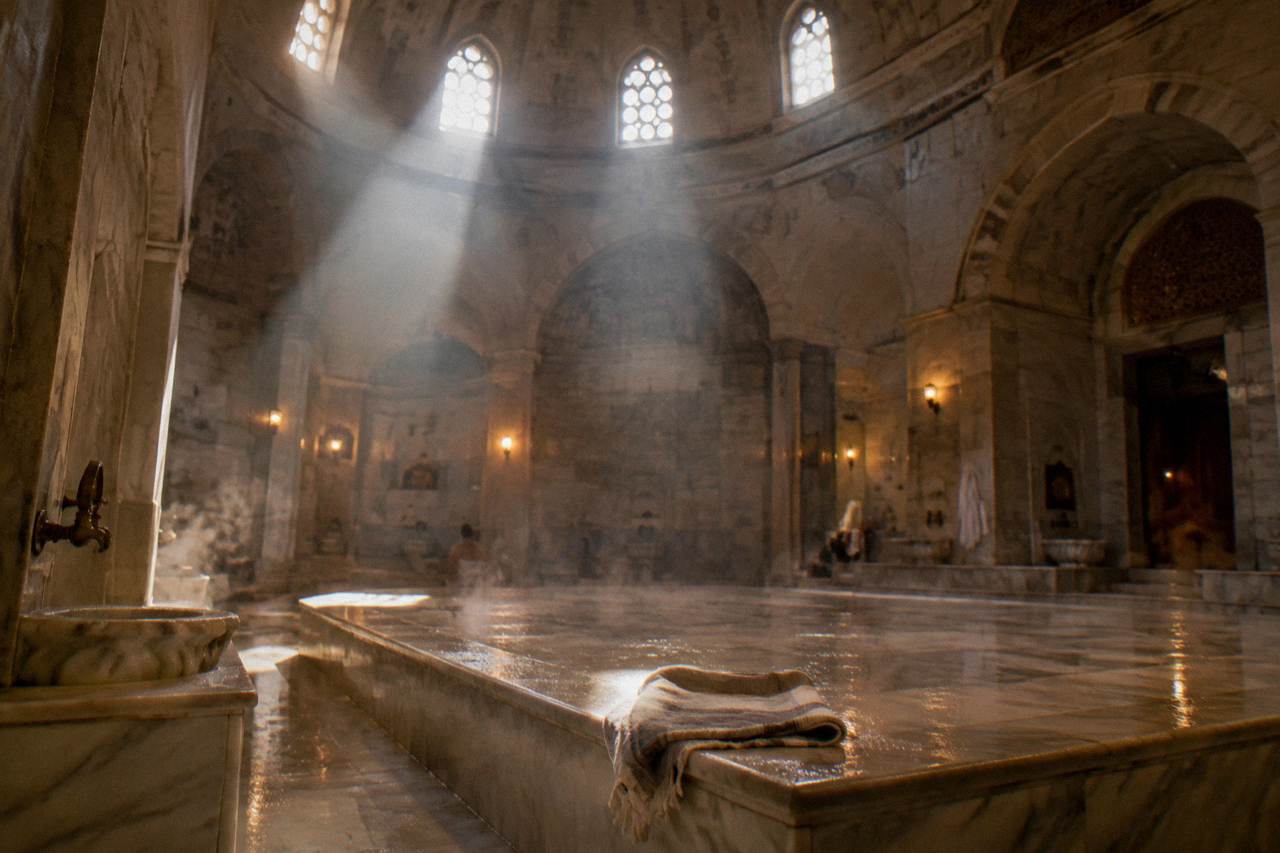
A session follows the classic Ottoman sequence: you change in a private cabin, move into the warm domed room to acclimatize on the heated marble, receive the kese scrub from an attendant, then the foam wash and massage, and finish in the cooler room with tea. The listings describe the same sequence with the redbud scent layered through the scrub, mask, and hair wash stages.
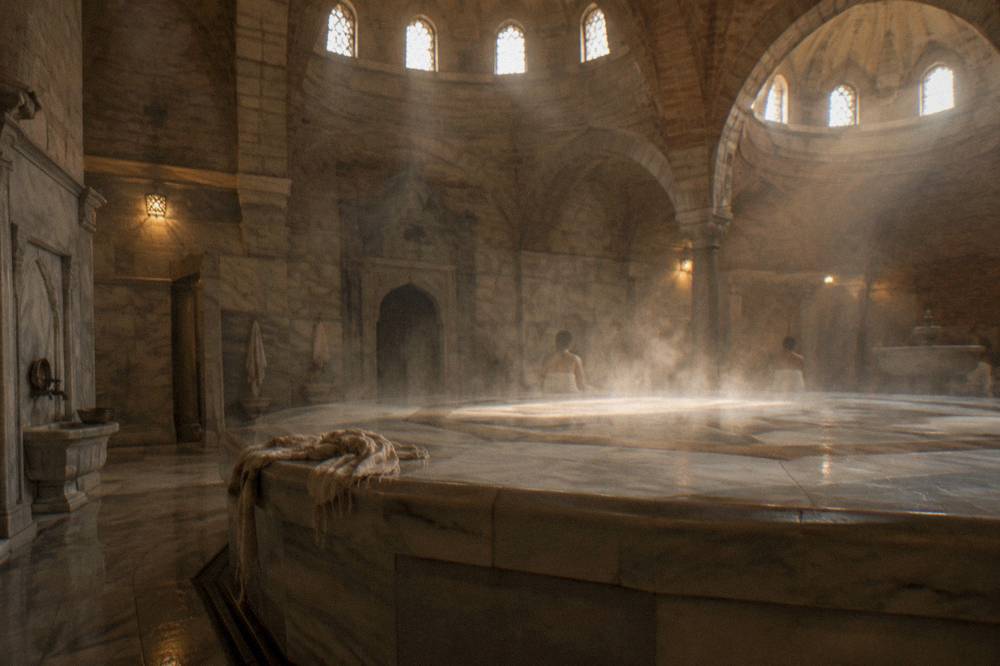
The warm room, or hararet, is the heart of any hamam, and here it sits under Sinan's dome with the small glass circles that Ottoman builders used to flood the space with soft daylight. The marble platform in the center, the göbek taşı, is where you lie and let the heat open the pores before the scrub begins. Attendants work same-sex sections, which at this bath follows the building's original mirror-image plan rather than an improvised division.
If you have never done a Turkish bath, the sequence can feel unfamiliar: the scrub is firm, the foam is copious, and the attendant directs the process rather than asking. Our walkthrough of what happens in a Turkish bath covers every stage in detail, and the etiquette questions, including what to wear, are answered in our piece on hammam clothing and towels. Reading either before booking makes the first visit calmer.
Why Is The Building's Design Unusual?
Sinan built the men's and women's sections on the same axis as mirror images of each other, a symmetrical plan recorded by the Istanbul Convention and Visitors Bureau, which is rarer than it sounds: most surviving Istanbul hamams stack their two sections side by side or at odd angles to fit narrow city plots. This bath, freed by a generous royal budget and a prime site, could afford perfect geometry.
The mirror-image plan means the two halves of the building are not identical copies but reflections, arranged so that the whole composition reads as a single balanced design from the square. Architectural historians treat it as one of the clearest expressions of Sinan's late style, where the plan itself carries the symbolism: two equal halves, male and female, under one dome system. The ICVB page is the primary source for the description of the mirror-image arrangement.
For a visitor, the design has a practical echo: the sections are genuinely separate, so couples and families do not bathe together here. That is standard at historic hamams and different from the private-suite products elsewhere in the city. If bathing together is the point of your visit, our guide to hamams for couples in Istanbul lists the baths built for shared sessions, including the Çukurcuma 1831 couples hamam from $103 per person, rated 5.0 from 188 reviews.
How Does The Hamam Compare With Its Neighbors?
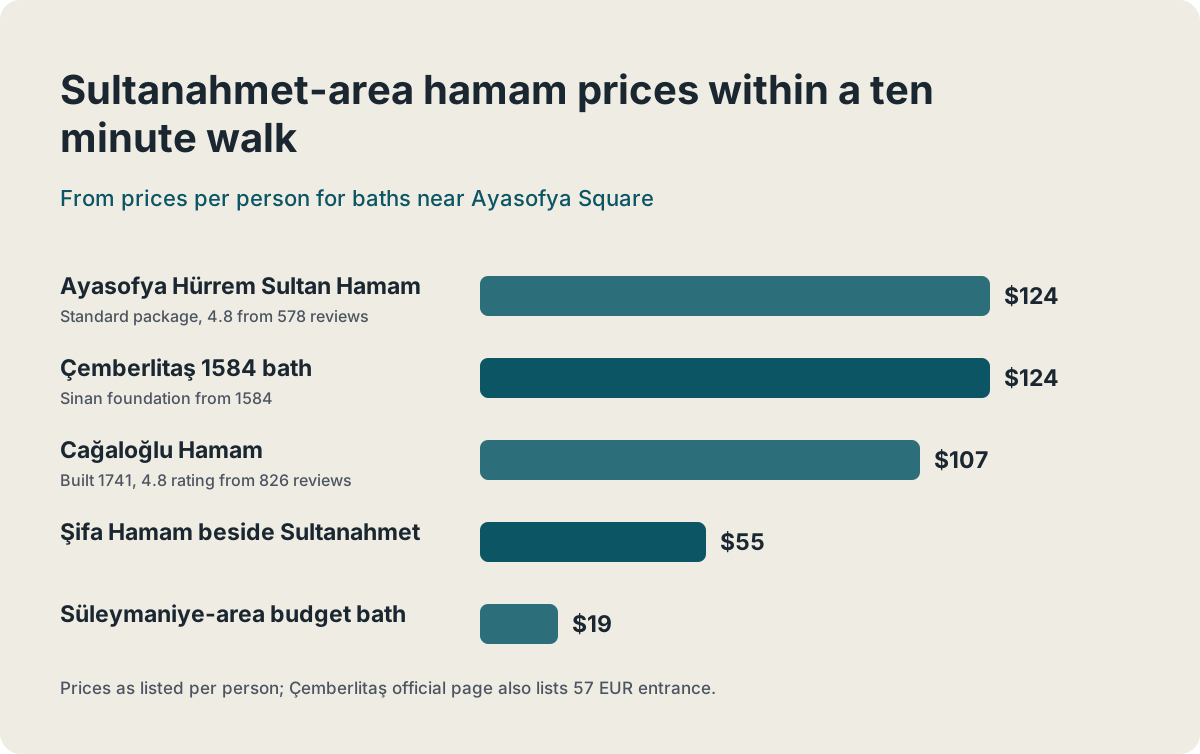
Within a ten minute walk of Ayasofya Square you can reach the Cağaloğlu Hamam from $107 per person, the Çemberlitaş 1584 bath from $124, the Şifa Hamam beside Sultanahmet from $55, and the Süleymaniye-area budget bath from $19, so the Hürrem package at $124 sits in the middle of the historic-bath price band while offering the most storied architecture of the group.
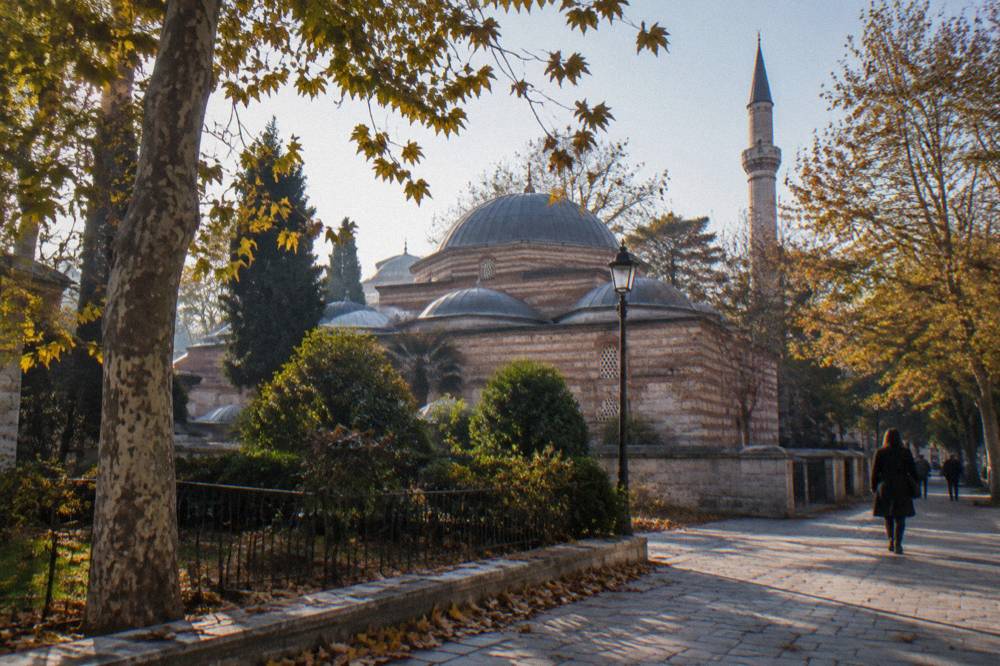
The honest comparison is not about quality but about character. Cağaloğlu, built in 1741, is the last great Ottoman bath and the most famous, with a 4.8 rating from 826 reviews on its standard package. Çemberlitaş, a 1584 Sinan foundation, is the working person's historic bath, open from early morning to midnight, and its official page lists entrance at 57 EUR with scrub and foam packages at 72 and 92 EUR. Şifa is the small neighborhood option two streets from the crowds, and the Süleymaniye-area bath is the budget choice for travelers watching every lira.
| Hamam | Built | From price (listing) | Rating and reviews | Character |
|---|---|---|---|---|
| Ayasofya Hürrem Sultan | 1556 to 1557 | $124 | 4.8 from 578 | Sinan architecture between the two great monuments |
| Cağaloğlu | 1741 | $107 | 4.8 from 826 | The last Ottoman bath, the most internationally known |
| Çemberlitaş | 1584 | $124 | 4.5 from 52 | Early Sinan foundation, long hours, self-service option |
| Şifa (Sultanahmet) | Not verified | $55 | 4.6 from 67 | Small local bath near the sights |
| Süleymaniye-area budget bath | Not stated | $19 | 4.8 from 38 | Bare-bones price, sauna and hot stone options |
The Cağaloğlu comparison deserves a paragraph of its own, because most visitors choosing between the two are really choosing between two eras. Cağaloğlu's roster package, from $107 with a 4.8 rating from 826 reviews, includes the hot room rest, the kese scrub with a one-use glove, the foam massage, tea and sherbet, and Turkish delight, with options for aromatherapy massage, collagen and clay masks. Its foam massage package from $138 carries a 5.0 rating from 153 reviews. Cağaloğlu's own reservation page prices its walk-in packages in euros, from The Istanbul Dream at 95 EUR up to the Elixir at 400 EUR, and states plainly that there is no couple service. The redbud-scented ritual here is the more romantic menu; Cağaloğlu's is the more institutional one, in the best sense of a bath that has run the same show for nearly three centuries.
Çemberlitaş works differently again: its official page publishes hours from 06:00 to midnight and a self-service entrance, so you can pay for the warm room alone and skip the scrub. The Çemberlitaş listing from $124 includes the traditional bath with soap massage. For travelers who want the historic architecture at the lowest possible outlay, the Süleymaniye-area budget bath at $19 is the outlier, though its 38-review pool is small and its 4.8 rating should be read with that in mind.
What Should You Know Before You Go?
Book ahead rather than walking in: the operator's own site is not currently verifiable for hours or walk-in prices, both listings show free cancellation, and the meeting point is the bath's door on Ayasofya Square, between the Blue Mosque and Hagia Sophia, which makes it the easiest hamam in the city to reach by tram. The T1 line stops at Sultanahmet a few minutes away, and every hotel in the old city can point to it. And once your bath is booked, the surrounding Sultanahmet district rewards slow wandering, so our guide to free attractions in Istanbul's historic old city can help you fill the rest of your day without spending another lira.
Timing matters more here than at most baths. The hamam sits in the densest tourist zone in Turkey, and midday sessions share the plaza with tour groups photographing the fountain outside. Early morning and late afternoon are the calmer windows, and our guide to the best time to visit an Istanbul hamam explains how heat, crowds and the bathing experience interact across the day and the seasons. If you are building a full old city day, the three day Istanbul itinerary with a hamam slots a bath into a sensible route.
A few practical notes the listings themselves state. The standard package's duration range of 45 to 110 minutes depends entirely on which options you add, so decide before you arrive whether the massage and mask are in your plan, because the price difference is the difference between the two packages. The Keyf Ritual is a fixed sequence, about an hour, and cannot be shortened. Neither listing includes hotel pickup, so budget the walk or tram ride.And the restrictions are firm: no smoking, no pets (assistance dogs are welcome), no red wine, and only a handbag, backpack or ordinary shopping bag for luggage. Check the live listing for age and accessibility rules before you pay.
Is The Hürrem Sultan Hamam Worth The Price?
At $124 from a 4.8 rating across 578 reviews, the standard package costs about the same as the Cağaloğlu and Çemberlitaş equivalents while offering the only interior in the group designed by Sinan himself for a royal patron, so the value question comes down to whether the architecture and the redbud ritual matter to you. For most visitors doing one historic bath in Istanbul, the answer is yes.
The honest counterargument is that a traveler on a tight budget gets a genuine scrub and foam at a fraction of the price elsewhere in Fatih, and a traveler chasing the most traditional experience might prefer Çemberlitaş's long hours and self-service option. But this bath sells something the others cannot: a bath in a building with a named architect, a named patron, and a documented century of survival through prison overflow, storage, and a carpet bazaar. The restoration that ended in 2011 returned the marble to its original purpose, and the two listings let you book it with free cancellation and no guesswork about the price.
Our broader weighing of the question, including the budget alternatives and the hygiene record, is in is it worth doing a Turkish bath in Istanbul, and the cost logic behind historic-bath pricing is unpacked in why hamam is so expensive. The short version: you are paying for heat, labor, marble and history, and here the history component is the strongest in the city.
The site you are reading, Hamam In Istanbul, covers every bathhouse in this guide in its own dedicated page, so if this bath is booked out or the price band does not fit, the alternatives above are one click away.
For travelers pairing the bath with sightseeing rather than treating it as the whole event, the Şifa Hamam beside Sultanahmet offers a 30-minute warm marble session with kese and foam from $55, rated 4.6 from 67 reviews, a shorter, cheaper format that leaves most of the day free for the museums. The full list of combined walking-and-bathing products is in our guide to hamam and tour packages in Istanbul.
Common Questions About The Hürrem Sultan Hamam
Who built the Ayasofya Hürrem Sultan Hamam and when?
Mimar Sinan designed and built it in 1556 to 1557 for Hürrem Sultan, the wife of Süleyman the Magnificent, on the site of the ancient Baths of Zeuxippus between the Blue Mosque and Hagia Sophia. The Istanbul Convention and Visitors Bureau records the dates and the attribution.
How much does the Hürrem Sultan Hamam cost?
The bookable packages start at $124 per person for the standard Ayasofya Hürrem Sultan Hamam package and $178 for the Hürrem Sultan Keyf Ritual. The operator's own site is not currently verifiable for walk-in prices, so the listings are the reliable source.
Can couples bathe together at the Hürrem Sultan Hamam?
No. Like the other historic hamams, the bath runs separate men's and women's sections, arranged in Sinan's original mirror-image plan. Couples wanting a shared session should look at the private-suite products in our hamams for couples guide.
Why was the Hürrem Hamam closed for so long?
It stopped operating as a bath in 1910. The building later held convicts when Sultanahmet Prison was full, stored paper and oil, and became a carpet bazaar after a first restoration in 1957 to 1958. A full restoration from 2008 to 2011 returned it to use as a bathhouse, and it reopened in May 2011.
Is the Hürrem Sultan Hamam suitable for children or pregnant visitors?
The listings ask that guests check the live booking page for age and accessibility rules, and note a luggage limit: handbag, backpack or ordinary shopping bag only. Check the listing's restrictions against your group before booking; both listings show free cancellation.
How long does a session at the Hürrem Hamam take?
The standard package runs 45 to 110 minutes depending on the options selected, such as the aromatherapy massage or face mask. The Keyf Ritual is a fixed sequence of about one hour.